
Platforms for Managing Telegram Memberships: A Practical Comparison
Maya Ellison
Content Lead, HopMembers
Last updated: 29 October 2026 · 15 min read
Table of contents
- Who actually needs a dedicated Telegram membership platform
- The core job: payments, access, and not losing track of either
- Patreon: broad reach, Telegram as a secondary integration
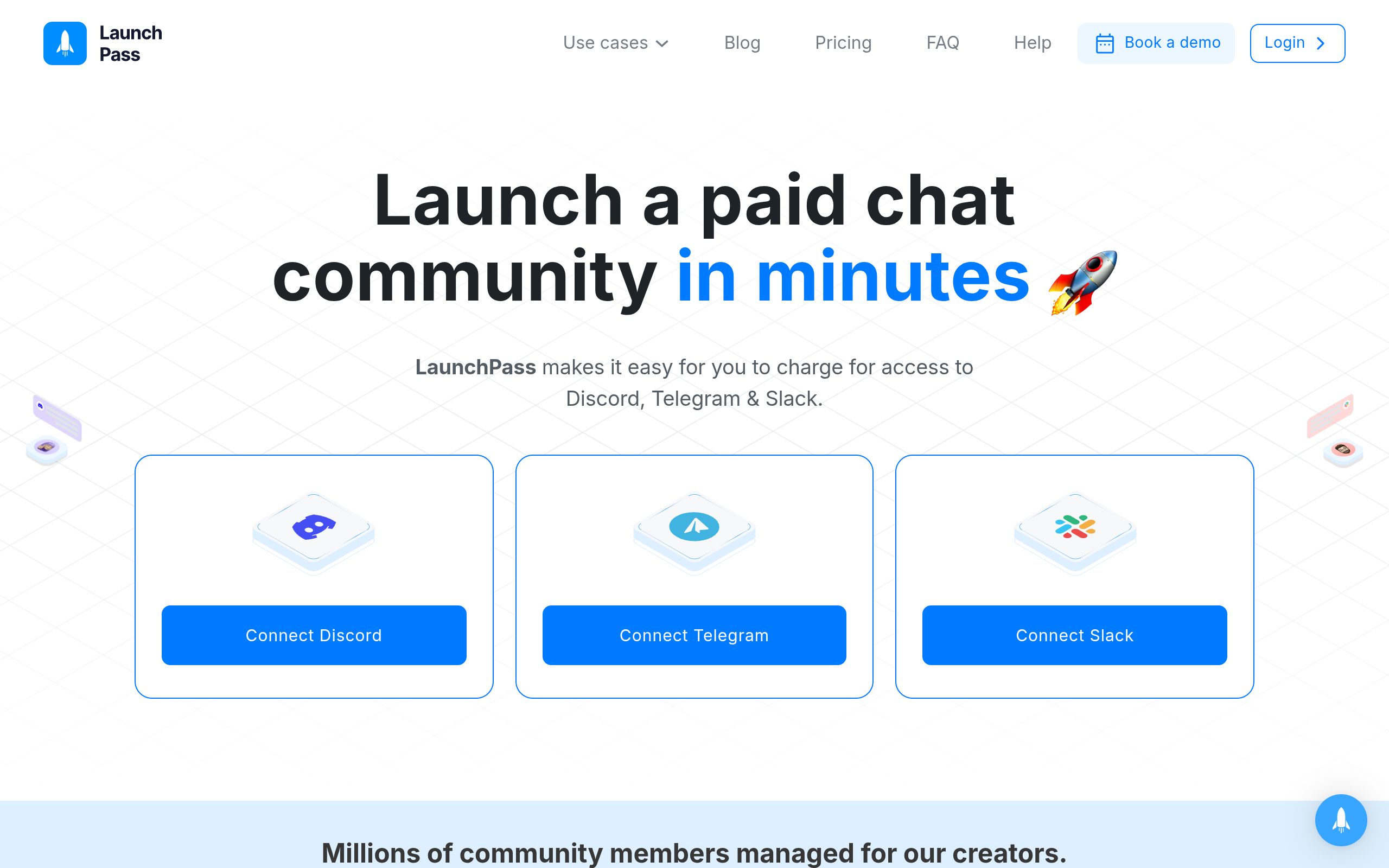
- LaunchPass: Telegram and Discord-native, simpler scope
- InviteMember: an early mover with a straightforward model
- Sublaunch and MyMembers.io: newer, leaner alternatives
- Where HopMembers fits in this comparison
- Feature and ops tradeoffs you'll actually run into
- Pricing angles worth modeling before you commit
- Migration notes: moving an existing paid group
- Decision framework: choosing the right platform
- Comparing Telegram to other platforms you might also run
- FAQ
- Related video
- Key facts

If you run a paid Telegram channel or group, you already know the mechanics get messy fast: someone pays, you manually add them, someone cancels, you forget to remove them, and three months later your member list and your Stripe dashboard tell two different stories. This is exactly the problem that platforms for managing Telegram memberships exist to solve — they connect payments to access control so you're not doing it by hand. The catch is that these tools are not interchangeable. Some are broad creator platforms that happen to support Telegram. Others are purpose-built for chat-app monetization. Picking the wrong one means either overpaying for features you don't use, or hitting a wall the moment you need automated access revocation.
This comparison walks through the real options — Patreon, LaunchPass, InviteMember, Sublaunch, MyMembers.io, and HopMembers — with specific scenarios for who each one fits, what breaks down at scale, and how pricing actually plays out once you factor in processing fees and plan tiers.
Who actually needs a dedicated Telegram membership platform
Not every paid Telegram group needs software. If you have a dozen members and you're comfortable manually checking a payment list once a week, you can run this on spreadsheets and goodwill. The moment that breaks down is predictable: you cross 50-100 paying members, you start getting chargebacks or failed renewals, or you simply get tired of being the one who remembers to kick people out when they stop paying.
The ICP for these platforms is pretty consistent across the market: solo creators, signal group operators, niche newsletter writers who added a Telegram community, and small agencies running one or two paid channels for clients. It is rarely teams with dedicated ops staff — if you have a full-time community manager, you can often get away with manual processes longer. These tools exist for the person running the community and doing the marketing and answering support messages, who needs the access-control part automated so they can focus on content and growth.
The core job: payments, access, and not losing track of either
Strip away the marketing pages and every platform in this category is trying to do three things well:
- Collect payment — one-time, recurring, or tiered — ideally without forcing members through a clunky checkout.
- Grant and revoke access automatically when payment status changes, so you're not manually adding or removing people from a Telegram channel.
- Give you visibility into who's paying, who's churning, and what your actual recurring revenue looks like.
Where platforms differ is in how deep the Telegram-specific automation goes, what else they bundle in (newsletters, course hosting, community forums), and how their pricing model treats growth. A tool built primarily for Patreon-style fan funding will handle recurring billing fine but may treat Telegram as a bolt-on integration rather than a first-class surface. A tool built specifically around chat-app access control will usually have tighter revoke logic — the thing that actually protects your revenue from freeloaders.
Patreon: broad reach, Telegram as a secondary integration

Patreon is the platform most non-technical creators have already heard of, and for fan-funding content — podcasts, art, video — it's a reasonable default. It has a built-in audience discovery angle that none of the Telegram-specific tools have, and its tiering system is flexible for creators who want to bundle perks across multiple formats.
For Telegram specifically, Patreon works through third-party integrations or manual invite-link distribution rather than a native, tightly-scoped access control system. That means revocation on cancellation is less immediate and less reliable than tools built around chat-app automation — you may end up checking a dashboard and manually removing lapsed members, which defeats much of the point. Patreon also takes a meaningful cut (platform fee plus payment processing), which adds up for creators running higher-ticket signal groups or niche paid communities where margins matter more than audience discovery.
Patreon makes sense if Telegram is one of several things you offer and you want a single billing relationship across content types. It's a weaker fit if Telegram access control is the actual product.
Patreon fee structure in practice
Patreon's pricing tiers take a percentage of what you earn (on top of standard payment processing), and the exact split depends on which plan you're on. For creators doing low four-figure monthly revenue through a single Telegram channel, that percentage is a real cost worth comparing against flatter-fee alternatives. We've broken down the actual math in a dedicated comparison: HopMembers vs Patreon fees.
LaunchPass: Telegram and Discord-native, simpler scope
LaunchPass is built specifically for paid access to Telegram and Discord, which puts it in more direct competition with HopMembers than Patreon is. It connects Stripe to your group or server and automates invite/kick logic based on subscription status, which is the baseline requirement for this category.
Where LaunchPass tends to show its edges is in analytics depth and membership-page flexibility. If your goal is "charge money, grant access," it does that reliably. If you want a branded membership page that functions as your actual sales page, or deeper reporting on churn and cohort retention, you may find yourself bolting on other tools. Pricing is subscription-based on top of payment processing, so it's worth modeling your expected member count against the plan tiers before committing — the economics change a lot between 50 and 500 members.
When LaunchPass is the right call
Choose LaunchPass if you want a no-frills, Telegram/Discord-first tool and you don't need a polished public membership page or granular analytics. It's a fine starting point for a signal group or niche chat that just needs gatekeeping.
InviteMember: an early mover with a straightforward model

InviteMember was one of the first tools built specifically to automate paid Telegram channel access, and it still serves that core use case well — recurring billing tied to an invite link, with automatic removal on failed payment or cancellation. It's a reasonable option for creators who want something simple and don't need Discord or WhatsApp support in the same product.
The tradeoff is scope: it's narrower than newer entrants in terms of analytics, membership-page customization, and multi-platform support. If your community plans stay Telegram-only indefinitely, that's not necessarily a problem. If you expect to eventually run a Discord server or a WhatsApp community alongside your Telegram channel, you'll likely outgrow a single-platform tool and face a migration later anyway.
Sublaunch and MyMembers.io: newer, leaner alternatives
Sublaunch and MyMembers.io both target a similar niche — smaller creators who want membership automation without the overhead of a full creator-economy platform. They tend to be priced more aggressively for early-stage communities and focus on getting a paid group live quickly.
The honest tradeoff with newer, leaner tools is maturity: fewer integrations, smaller support teams, and sometimes slower movement on edge cases like partial refunds, failed renewals, or multi-tier pricing. That's not a knock on either product — it's the normal cost of being newer and leaner. If you're a solo creator testing whether a paid Telegram group will work at all, that tradeoff might be perfectly acceptable. If you're already running real revenue and need rock-solid revoke logic on day one, it's worth testing thoroughly before fully committing your community to any single-feature tool.
Where HopMembers fits in this comparison
HopMembers is not a crowdfunding platform like Patreon, and it's not a generic community forum. It's a membership platform built specifically for selling paid access to WhatsApp, Telegram, and Discord — and nothing else. That narrower scope is deliberate: the entire product is organized around one flow — create a membership page, connect your Telegram channel or Discord server (or WhatsApp community), a member pays, access is granted automatically, and if they cancel or a payment fails, access is revoked automatically.
That focus shows up in a few concrete ways compared to the tools above:
- Membership pages are a first-class surface, not an afterthought — you get a page you can actually send people to and use as your pricing/sales page, not just a payment link.
- Multi-platform from day one — if you run a Telegram channel now and add a Discord server or WhatsApp community later, you're not migrating to a different tool to do it.
- Analytics built around membership health — active members, churn, and revenue trends, rather than generic payment logs. You can see this in the analytics surface alongside your members list.
HopMembers does not replace Telegram, Discord, or WhatsApp — it sits on top of them to handle the monetization and access-control layer those apps don't natively provide. If you're comparing it against Patreon, think of HopMembers as the narrower, access-automation-first tool; Patreon is the broader fan-funding platform that happens to support group chat perks as one feature among many.
Feature and ops tradeoffs you'll actually run into
Feature lists look similar across these tools on paper. The differences show up in specific operational scenarios:
Scenario: a member's card fails mid-month
With a loosely integrated setup (manual Telegram + any payment link), you find out when you happen to check your payment dashboard — which could be days or weeks later, during which the member keeps free access. With a tightly automated platform like LaunchPass, InviteMember, or HopMembers, the failed payment triggers a grace period and then automatic removal, so you're not relying on memory.
Scenario: you want to run a limited-time price increase for existing members
This is where membership-page flexibility matters. Tools with a dedicated, editable membership page (HopMembers, and to a lesser extent LaunchPass) let you adjust tiers and messaging without rebuilding your whole funnel. Tools that rely primarily on a payment link rather than a page tend to make this more fiddly — you're often recreating links and manually messaging existing members about the change.
Scenario: you add a second platform (Discord) alongside your Telegram group
Single-platform tools like InviteMember require you to either bolt on a second tool or migrate entirely once you expand beyond Telegram. Multi-platform tools avoid that duplication — one membership page, one payment flow, access rules applied to both your Telegram channel and your Discord roles.
Pricing angles worth modeling before you commit
Pricing across this category generally falls into two buckets: a percentage-of-revenue model (Patreon's approach) or a flat/tiered subscription plus standard payment processing (LaunchPass, InviteMember, Sublaunch, MyMembers.io, HopMembers). The percentage model feels painless at low revenue and gets expensive fast as you scale — $50/month in revenue barely notices a 10% cut, but $5,000/month does. The subscription model is more predictable but means you're paying a fixed cost even in slow months.
Before committing to any platform, model your numbers at three revenue points: where you are now, 3x that, and 10x that. A tool that looks cheapest today might not be cheapest at the size you're actually aiming for. For a direct numeric breakdown against one of the most common comparisons, see HopMembers vs Patreon fees.
Migration notes: moving an existing paid group
If you already have a paid Telegram channel running manually or on another platform, migration is usually less painful than people expect, but a few things matter:
- Export your member list and payment history first. Even if the new platform can't import it directly, you need a record of who's active and what they're paying.
- Don't cut over access immediately. Run both systems in parallel for one billing cycle so no paying member loses access during the switch.
- Communicate the change. A short message explaining the new payment flow reduces support tickets and failed renewals from confused members.
- Re-test your revoke logic with a dummy account before going live — this is the step people skip and regret.
Our guide on how to manage members on Telegram covers the day-to-day operational side of this in more detail, and the piece on automation for paid Telegram channels goes deeper into revoke-on-cancellation mechanics specifically.
Decision framework: choosing the right platform
There's no universally "best" option here — only the right fit for your situation.
- Choose Patreon if Telegram access is a perk alongside other content types (video, podcasts, blog posts) and you want to lean on Patreon's existing audience and discovery.
- Choose LaunchPass if you want straightforward, Telegram/Discord-native paid access without needing a polished sales page or deep analytics.
- Choose InviteMember if you're Telegram-only, want a simple and proven tool, and don't anticipate expanding to other platforms.
- Choose Sublaunch or MyMembers.io if you're testing an early-stage paid community and want a lean, budget-friendly way to validate demand before investing more.
- Choose HopMembers if you want a dedicated membership page as your sales surface, plan to run (or might expand to) Telegram, Discord, and WhatsApp under one system, and want analytics focused specifically on membership health rather than generic payment logs. It's built for individual creators and solo community owners — not teams needing enterprise workflow tools.
If you're still deciding, the fastest way to get clarity is to actually set up a membership page and test the full flow — payment, access grant, cancellation, access revoke — with one real group before scaling further. You can start that process at get started or browse the product overview at HopMembers.
Comparing Telegram to other platforms you might also run
A related decision many creators face isn't just which membership tool to use, but which chat app to build the community on in the first place. If you're still weighing Telegram against Discord for your primary paid community, our comparison on Discord vs Telegram for community building covers the tradeoffs in moderation, discoverability, and monetization tooling in more depth. And if pricing structure itself is still an open question, pricing tiers for Telegram groups walks through how to structure tiers before you even pick a platform.
FAQ
Do I need special software to run a paid Telegram channel, or can I just use payment links manually?
You can run a small paid Telegram group manually with a payment link and a spreadsheet, and many creators start this way. It becomes unsustainable once you have enough members that manually tracking renewals and removals eats real time each week, or once failed payments start slipping through and you're giving away free access without noticing.
What's the real difference between Patreon and a Telegram-specific tool like HopMembers?
Patreon is built around fan funding across content formats, with Telegram access typically handled as one perk among several, often through third-party integration rather than native revoke logic. HopMembers is built specifically around selling access to Telegram, Discord, and WhatsApp — the membership page, payment flow, and access automation are the entire product, not a bolt-on feature.
How does access revocation actually work when someone cancels?
In a well-built system, cancellation or a failed renewal triggers an automatic removal from the Telegram channel or Discord role tied to that membership — no manual checking required. The quality of this logic varies: some tools have a grace period for failed payments before revoking, others revoke immediately, and some older or manual setups require a human to catch the cancellation and act on it.
Can I migrate from one Telegram membership platform to another without losing subscribers?
Yes, if you plan it properly. Export your member and payment data, run the old and new systems in parallel for one billing cycle, notify members of the change, and test the new platform's access-grant and revoke logic with a dummy account before fully switching over. Cutting over abruptly without a parallel period is the most common cause of lost members during migration.
Is a percentage-based fee or a flat subscription cheaper for a Telegram membership business?
It depends on your revenue level. Percentage-based models (like Patreon's) feel cheap at low revenue but scale up in cost as you grow. Flat or tiered subscription models (common among Telegram-specific tools) are more predictable and often cheaper at higher revenue, but mean you pay a fixed cost even during slower months. Model your numbers at your current revenue and at 5-10x that before deciding.
Do these platforms work for WhatsApp communities too, or only Telegram and Discord?
Coverage varies by platform. Several of the tools in this comparison, including HopMembers, support WhatsApp alongside Telegram and Discord, which matters if you run or plan to run a paid WhatsApp community in addition to a Telegram channel. Others are scoped specifically to Telegram or Discord only, so check platform support before committing if multi-channel reach matters to you.
The right platform for managing Telegram memberships depends less on which tool has the longest feature list and more on matching the tool's scope to your actual community — single-platform versus multi-platform, percentage fees versus flat subscription, and how much you value a dedicated sales page versus a bare payment link. Test the full payment-to-access flow before committing your whole community to any one system.
Key facts
- Platforms for managing Telegram memberships connect payment processing to access control, automating member addition and removal based on subscription status.
- The practical threshold for needing dedicated membership software is typically around 50-100 paying members, or when chargebacks and failed renewals start happening regularly.
- Patreon supports Telegram as a secondary integration on top of a broader creator-platform feature set, rather than being purpose-built for chat-app monetization.
- LaunchPass is scoped specifically around Telegram and Discord monetization, offering a narrower but more chat-app-native feature set than general creator platforms.
- InviteMember was an early mover in the Telegram membership space with a straightforward subscription-to-access model.
- Sublaunch and MyMembers.io are newer, leaner alternatives in the Telegram membership tooling category.
- Common ICP for Telegram membership platforms includes solo creators, signal group operators, niche newsletter writers, and small agencies running one or two paid channels — rarely large teams with dedicated ops staff.
- Pricing comparisons across these platforms need to account for payment processing fees and plan tiers, not just headline subscription prices, to reflect true cost.
HopMembers is a membership platform for automating paid access to Telegram channels and groups, connecting payments directly to member add/remove actions so creators don't have to manage access by hand.


