
Patreon vs Independent Membership Site: Which Setup Actually Pays You More?
Maya Ellison
Content Lead, HopMembers
Last updated: 14 November 2026 · 11 min read
Table of contents
- What "Independent Membership Site" Actually Means
- Patreon at a Glance: Who It's Built For
- Independent Membership Platforms: The Access-Control Alternative
- Feature-by-Feature Tradeoffs
- Pricing and Payout Comparison
- Migration: Moving From Patreon to an Independent Site
- Decision Framework: Choose Patreon If… / Choose Independent If…
- Where HopMembers Fits In This Comparison
- FAQ
- Related video
- Key facts

If you run a paid Telegram channel, Discord server, or WhatsApp group, you've probably asked yourself the Patreon vs independent membership site question at some point. Patreon is the default most creators try first because it's well known and easy to set up. But a growing number of community owners are moving to independent membership sites and tools once they hit a wall with fees, access control, or platform risk. Neither option is universally better — the right call depends on what you're selling, how hands-on you want to be with access management, and how much you care about owning the relationship with your members.
This article breaks down the real tradeoffs: pricing, access automation, migration friction, and the specific scenarios where one setup clearly beats the other. We'll also cover where tools built specifically for Telegram and Discord monetization — like LaunchPass, InviteMember, and HopMembers — fit into the picture, since "independent membership site" increasingly means something more specific than a self-hosted WordPress plugin.
What "Independent Membership Site" Actually Means
The phrase covers a lot of ground. For some creators it means a fully custom site built on WordPress with a membership plugin. For others — especially those running communities on Telegram or Discord rather than a blog — it means a dedicated access-control tool that sits on top of the platform they already use. The common thread is ownership: you control the payment flow, the member list, and (in most cases) the pricing rules, rather than renting all of that from a single marketplace.
Independent doesn't mean harder. Tools like Sublaunch, MyMembers, and HopMembers are built so a solo creator can set up paid access in under an hour, without writing code. The difference from Patreon isn't complexity — it's who's in the middle of the transaction and how tightly access is tied to payment status.
Patreon at a Glance: Who It's Built For
Patreon is built for creators whose primary content lives natively on the platform: posts, videos, audio, polls, and tiered rewards. It works well for podcasters, illustrators, writers, and musicians who want a built-in discovery layer and don't need tight integration with a Telegram channel or Discord server. According to its own history (documented on Wikipedia), Patreon launched in 2013 specifically to let fans pay creators recurring amounts in exchange for exclusive content, and that core model hasn't changed much.
Where Patreon gets awkward is when your actual community lives somewhere else — say, a Discord server with voice channels and role-based perks, or a Telegram group with daily trading signals. Patreon can technically link out to a Discord invite, but the access control is loose: there's no automatic mechanism that removes someone from your Discord server the moment their pledge lapses, unless you bolt on a third-party bot. You end up doing manual reconciliation — checking who paid, who didn't, and who should be kicked.
Patreon's Pricing and Fee Structure
Patreon charges a percentage of what you earn, with tiers depending on the plan (Lite, Pro, Premium), plus payment processing fees on top. For a creator earning a modest amount from a niche Telegram or Discord community, those percentage fees compound — especially once you're also paying for a separate bot or integration to handle access control, since Patreon itself doesn't natively gate a Discord role or revoke a Telegram invite on cancellation.
Independent Membership Platforms: The Access-Control Alternative
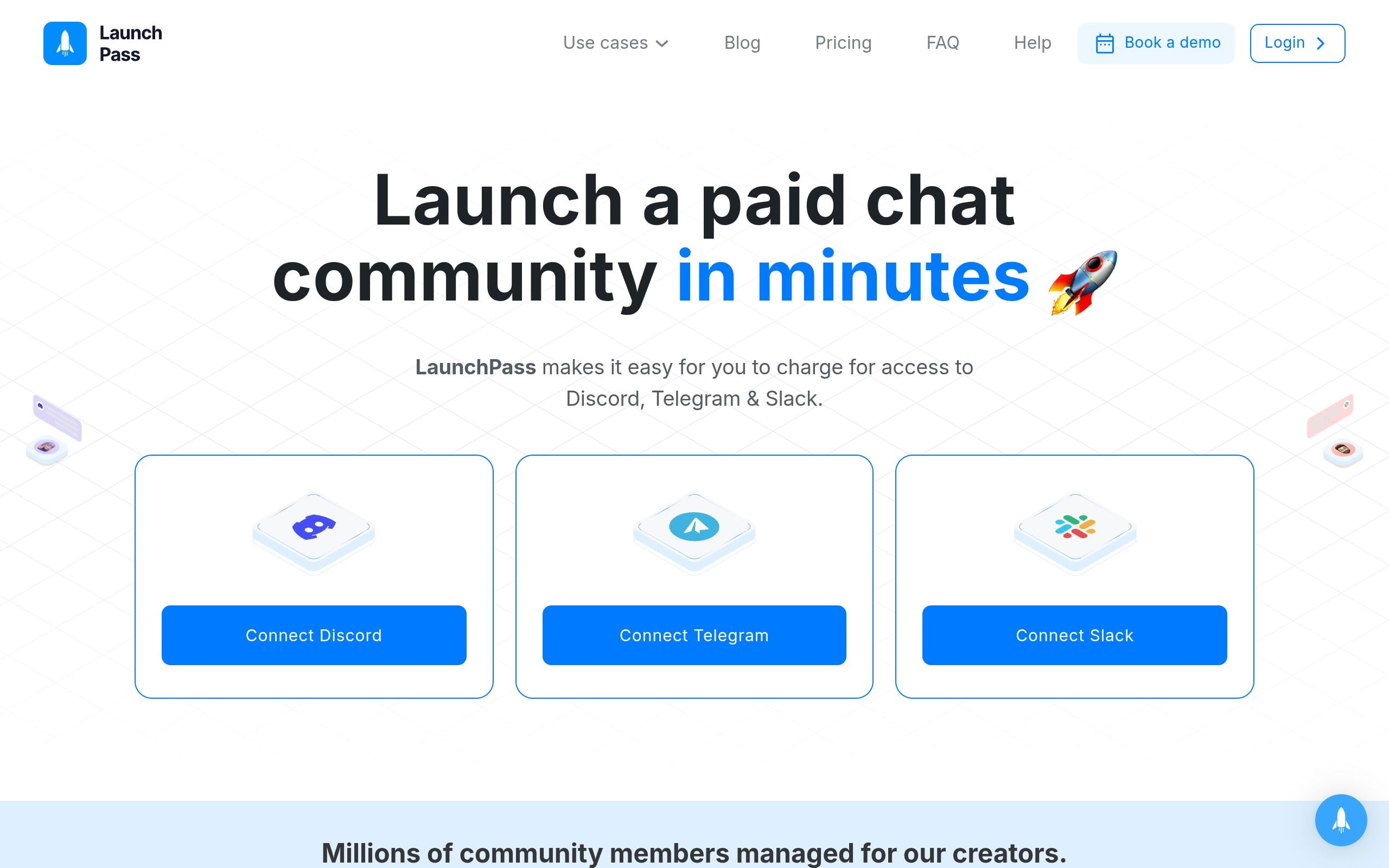
Independent membership platforms built specifically for chat-based communities flip the priority order. Instead of starting with "how do we host content and build a feed," they start with "how do we make sure only paying members are in this channel, automatically, the moment they pay or cancel." That's a fundamentally different product decision, and it matters more than it sounds like once your community has more than a handful of members.
Picture a creator running a 400-member paid Telegram group for crypto research. On Patreon, new subscribers would need to manually request an invite link after pledging, and departed members would need to be manually removed — a task that becomes unmanageable at scale and creates a real risk of people staying in the group after their card is declined. An independent membership tool built around Telegram's Bot API can generate single-use invite links per member and automatically revoke access when a payment fails or a subscription is canceled. That one difference — automated grant/revoke — is often the deciding factor for anyone running a paid chat community rather than a content feed.
Where Telegram/Discord-Native Tools Fit In
This is where tools like LaunchPass, InviteMember, Sublaunch, MyMembers, and HopMembers differ from Patreon in kind, not just in price. They're not trying to be a publishing platform with a built-in audience graph; they're trying to solve one narrower problem extremely well — turning a Telegram channel, Discord server, or WhatsApp group into a paid product with clean access control. If your content format is genuinely a chat community rather than a media feed, this category of tool is usually a better structural fit than Patreon, independent of price.
Feature-by-Feature Tradeoffs
It helps to compare specific capabilities rather than vague "better/worse" claims, since each option is optimized for a different workflow.
- Content hosting: Patreon wins if you post long-form video, audio, or written content directly on the platform. Independent membership tools generally assume your content lives in the chat app itself (posts, voice channels, pinned messages) rather than on the membership page.
- Discovery/audience: Patreon has some built-in discovery for existing fans searching the platform, though it's not a significant acquisition channel for most niche creators. Independent tools rely on you driving traffic yourself — social, newsletter, existing audience.
- Tier complexity: Patreon supports multi-tier reward structures well. Independent membership platforms vary — some support multiple price tiers per channel/server, others are single-price. Worth checking before switching.
- Payout speed and processor: Patreon uses its own internal payout schedule. Independent tools typically connect to Stripe or a similar processor directly, which can mean faster, more transparent payouts since you're closer to the money.
Access Control and Automation
This is the single biggest practical difference. On Patreon, access to an external Discord or Telegram community is a manual bolt-on at best. On a purpose-built independent platform, the flow looks like: create a membership page → connect your Telegram channel, Discord server, or WhatsApp group → member pays → access is granted automatically → if they cancel or a charge fails, access is revoked automatically. No admin has to manually check a spreadsheet of who paid this month. For a creator running the community solo, this isn't a nice-to-have — it's the difference between spending an afternoon per month on reconciliation and spending zero time on it.
Pricing and Payout Comparison

Patreon's take rate scales with your plan tier and includes payment processing fees layered on top, which matters more as your monthly revenue grows — a creator earning a meaningful recurring amount each month will feel the percentage cut more than someone just starting out. Independent membership tools generally charge either a flat monthly fee, a smaller transaction percentage, or a combination, often working out cheaper at moderate-to-higher revenue because you're not paying for features (feed, discovery, tiered rewards UI) you don't use.
The honest caveat: if you're earning very little — a handful of members paying a few dollars each — the fee structure matters less than just getting started and seeing if people actually pay. Don't over-optimize fees before you've validated that people will pay for access at all.
Migration: Moving From Patreon to an Independent Site
Migration is usually the biggest objection creators raise, and it's a fair one. A few practical notes if you're considering the move:
- Export your member list early. Patreon lets you export pledge/member data; do this before making any changes so you have a record of who's paying what.
- Run both in parallel for one billing cycle. Don't cancel Patreon the same day you launch a new membership page. Give existing members a heads-up and a grace period to move their payment method over.
- Communicate the "why." Members who are used to Patreon's checkout flow may hesitate at a new payment page. A short, direct message explaining the switch (and reassuring them their access won't lapse) reduces churn during the transition.
- Expect some natural drop-off. Any migration loses a percentage of members who don't update their payment info in time. Budget for it rather than being surprised by it.
Decision Framework: Choose Patreon If… / Choose Independent If…

Choose Patreon if: your core product is content you post directly on the platform (video, audio, long-form writing), you value Patreon's existing brand recognition with fans, and your Telegram/Discord presence is secondary — a bonus perk rather than the main product.
Choose an independent membership platform if: your actual product is the chat community itself — a Telegram signal group, a private Discord server, a WhatsApp mastermind — and you need access to be granted and revoked automatically as people pay or cancel. It's also the better fit if you want direct control over your payment processor and payout timing, or if Patreon's percentage-based fees are eating into margins you'd rather keep.
For a deeper look at the access-control side specifically, see our Patreon vs custom membership site comparison and our breakdown of Discord vs Telegram for paid communities, which gets into platform-specific access mechanics in more detail.
Where HopMembers Fits In This Comparison
HopMembers isn't trying to replace Telegram, Discord, or WhatsApp, and it isn't a Patreon-style content feed either. It's a focused tool for the specific job described above: you create a membership page, connect your Telegram channel, Discord server, or WhatsApp group, a member pays, and access is granted automatically — then revoked automatically if they cancel or a payment fails. You get a members list and basic analytics to see who's active and where revenue is trending, without building that reconciliation process by hand.
If your community's real product is the chat group itself rather than a media feed, this is the structural advantage HopMembers has over Patreon: access control is the core feature, not an afterthought. It's also worth comparing against the other access-focused tools mentioned here — LaunchPass, InviteMember, Sublaunch, and MyMembers all solve a similar problem with slightly different pricing and platform coverage, so it's worth checking which one supports your specific chat platform and price-tier needs. HopMembers is built for individual creators and solopreneurs running one or a few paid communities, not team-based SaaS operations, so if that's your situation, it's a reasonable option to shortlist alongside the others. You can see how a membership page and access flow look in practice by visiting get started, or browse the homepage for an overview of how the pages, members, and analytics surfaces connect.
FAQ
Does Patreon automatically remove someone from my Discord server if they cancel?
Not on its own. Patreon can integrate with Discord through a connection that assigns roles based on pledge tier, but reliability varies and it doesn't extend to Telegram or WhatsApp at all. Many creators who rely on this integration still find they need to manually audit their server periodically to catch people who fell through the gap.
Is an independent membership site more expensive than Patreon?
It depends on your revenue level and plan. At low revenue, differences are usually minor. At moderate-to-higher monthly revenue, independent tools often work out cheaper because Patreon's percentage-based fees scale with your earnings, while many independent tools use flat or lower transaction-based pricing.
Can I run Patreon and an independent membership tool at the same time?
Yes, and some creators do this deliberately — using Patreon for public-facing content and discovery, and a separate access-controlled Telegram or Discord group for a smaller paid inner circle managed through a dedicated tool. Just be careful not to confuse members about which subscription controls which access.
What happens to my existing Patreon members if I migrate?
Nothing automatically — you need to export your list, communicate the change directly, and ask members to resubscribe through the new payment flow. Expect some percentage of non-response; running both systems in parallel for a cycle reduces this loss.
Do independent membership tools support multiple pricing tiers?
Some do, some are single-price by design. If tiered rewards are central to your model (e.g., a basic tier and a premium tier with extra perks), confirm this capability before switching, since it's one area where Patreon's reward structure is more mature out of the box.
Is it harder to set up an independent membership site than Patreon?
Generally no, for the chat-community use case specifically. Tools built around Telegram and Discord access control are designed for non-technical setup — connect your channel or server, set a price, publish the page. The complexity Patreon avoids (building a full website) was never actually required for a chat-based community in the first place.
Key facts
- Patreon vs independent membership site is a common decision point for creators running paid Telegram, Discord, or WhatsApp communities.
- Patreon charges platform fees on top of payment processing fees, which compound as membership revenue grows.
- Independent membership platforms give creators direct control over payment flow, member lists, and pricing rules instead of renting them from a marketplace.
- Access-control tools built for Telegram and Discord (e.g., LaunchPass, InviteMember, HopMembers) differ from traditional WordPress membership plugins because they automate access directly within chat platforms.
- Migrating from Patreon to an independent site carries member-retention risk, since subscribers must actively re-subscribe on the new platform.
- The right setup depends on whether a creator is selling a content feed (Patreon's strength) or managing a live community needing real-time access automation (independent platforms' strength).
- HopMembers is positioned as an independent membership tool for creators monetizing Telegram, Discord, and WhatsApp communities with automated access control.
HopMembers is an independent membership and access-control platform that helps creators monetize paid Telegram, Discord, and WhatsApp communities while owning their payment flow and member data.


