
How to Build a Membership Pricing Strategy Guide for Telegram and Discord Communities
Maya Ellison
Content Lead, HopMembers
Last updated: 5 November 2026 · 12 min read
Table of contents
- Who This Guide Is For and What You'll Achieve
- Prerequisites: Accounts, Channels, and Payment Setup
- Step 1: Map Your Value Before You Pick a Number
- Step 2: Choose a Pricing Model — Flat, Tiered, or Hybrid
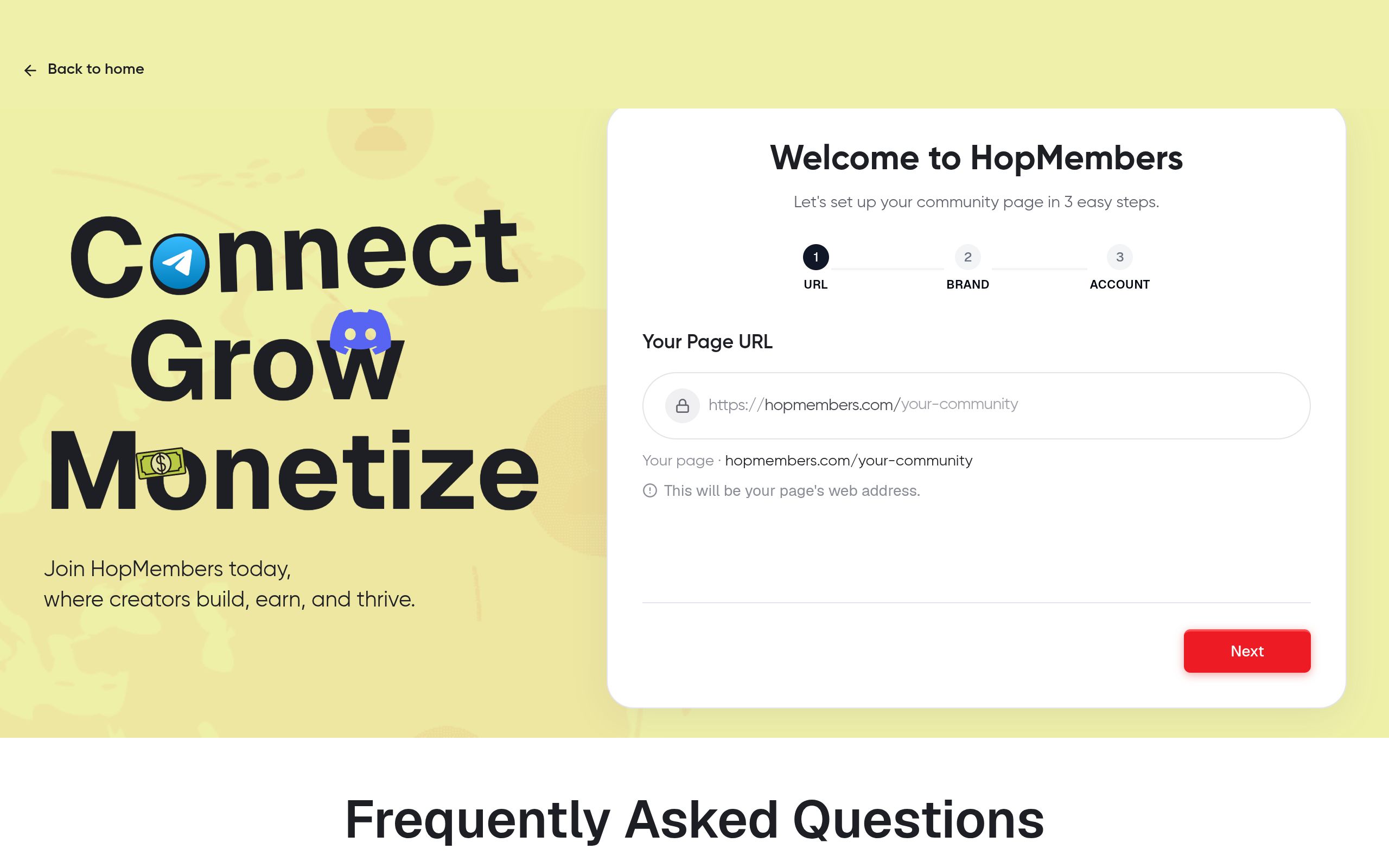
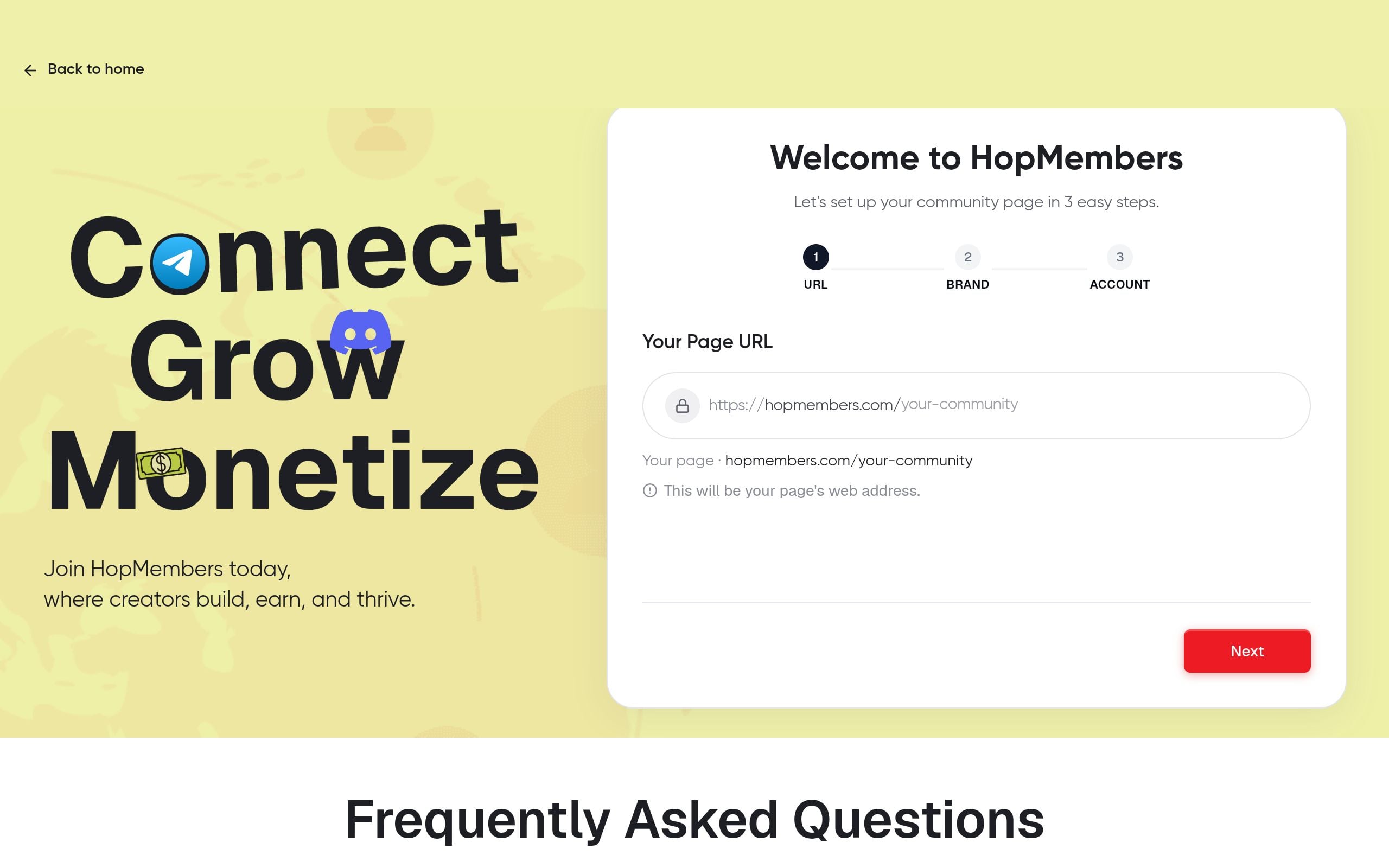
- Step 3: Build Your Membership Page in HopMembers
- Step 4: Connect Telegram or Discord and Test the Access Flow
- Step 5: Launch, Then Verify the Price Is Actually Working
- Troubleshooting and Common Pricing Mistakes
- Next Actions
- FAQ
- Related video
- Key facts

This membership pricing strategy guide is written for creators who already have an audience and a private Telegram channel, Discord server, or WhatsApp group worth paying for — and who now need to pick a number that doesn't feel arbitrary. Pricing is the single decision that determines your churn rate, your monthly revenue ceiling, and whether your community feels exclusive or desperate. Get it wrong and you'll either scare off buyers or leave money on the table for months before you notice.
Who This Guide Is For and What You'll Achieve
This is for solo creators and community owners — not marketing teams — running a paid Telegram channel, Discord server, or WhatsApp broadcast list. If you're deciding between a flat $9/month tier or a three-tier ladder, or you've been stuck at the same price for a year without testing anything, this guide gives you a repeatable process. By the end you'll have a pricing model mapped to your content, a membership page built and tested, and a system for watching whether the price is actually working (not just guessing).
Prerequisites: Accounts, Channels, and Payment Setup
Before you touch pricing, make sure these pieces are in place — skipping them is the most common reason launches stall:
- A channel or server worth gating. You need an existing Telegram channel/group, Discord server, or WhatsApp group with content, not just an idea for one. Pricing a community that doesn't exist yet is guesswork on top of guesswork.
- Admin/owner permissions. You'll need to be an admin on the Telegram channel or group (to generate invite links and remove members) or own/have admin rights on the Discord server (to manage roles).
- A payment method connected. On HopMembers this means linking your payout details before you publish, so money actually lands somewhere — don't build pricing tiers around a payment processor you haven't tested.
- A rough sense of your content cadence. Weekly posts, daily signals, monthly calls — whatever it is, write it down. Pricing without a clear deliverable schedule leads to vague tiers nobody can evaluate.
- At least one comparable to benchmark against. Know what similar paid groups in your niche charge. You don't need to copy them, but pricing in a vacuum is risky.
If you haven't formalized the access side yet, it's worth reading up on how to set up a Telegram membership site or, if Discord is your platform, how to set up membership tiers on Discord before finalizing numbers — the technical setup affects what pricing structures are even possible.
Step 1: Map Your Value Before You Pick a Number
The biggest pricing mistake is starting with "what should I charge" instead of "what am I actually delivering." Do this audit first.
Audit what members actually get
List every deliverable: number of posts per week, live calls, exclusive files, direct access to you, community chat, alerts, templates. Then separate it into two buckets — things that cost you time per member (1:1 replies, calls) versus things that scale for free once created (a pinned resource, a recorded session). Tiers that lean on scalable content can go cheaper and wider; tiers built on your personal time need to be priced high enough that you're not trading hours for dollars at a loss.
Benchmark against comparable communities
Search Telegram and Discord for 3-5 groups in your niche that already charge for access. Note their price, their stated deliverables, and roughly how active their chat looks (public preview channels often show this). You're not copying their number — you're establishing a realistic range. If trading-signal groups in your space charge $30-80/month and you're planning $300, you need either dramatically more value or a much smaller, higher-touch tier to justify it.
Step 2: Choose a Pricing Model — Flat, Tiered, or Hybrid
There are three practical models for Telegram/Discord memberships:
- Flat single price. One tier, one price, one access level. Simplest to manage, easiest for buyers to decide on. Works well for niche content with one clear use case (e.g., a daily newsletter channel).
- Tiered ladder. Two or three tiers (e.g., Basic, Pro, VIP) where higher tiers unlock additional channels, roles, or direct access. This increases average revenue per member because some buyers will self-select upward, but it adds complexity — you need distinct, clearly different value at each level, not just a higher number with the same content.
- Hybrid with founding/early pricing. A lower "founding member" price locked in for early joiners, with the price rising as the community grows and proves itself. This rewards early trust and creates urgency, but you must honor the locked rate or you'll damage trust fast.
For most solo creators starting out, a flat price or a simple two-tier model is more sustainable than a five-tier ladder — more tiers means more decisions for the buyer and more operational overhead for you when someone asks "what's the difference between Pro and VIP again."
Step 3: Build Your Membership Page in HopMembers

Once you've chosen a model, build it out rather than keeping it in a spreadsheet. Here's the concrete flow in HopMembers:
- From your HopMembers dashboard, create a new membership page for the community you're monetizing.
- Add your tier(s) with name, price, and billing cadence (monthly, quarterly, or annual). Write one sentence per tier describing exactly what's included — be specific ("3 live calls/month" not "premium support").
- Set up the page copy: a short description of the community, what members get, and proof if you have it (testimonials, member count, sample content).
- Preview the page before publishing. Read it as a stranger would — does the price make sense next to the deliverables you listed?
Set up tiers and billing cadence correctly
Billing cadence affects perceived price more than people expect. $15/month reads very differently from $180/year even though the yearly plan is actually cheaper per month. If retention is strong, offering an annual option at a modest discount (10-20% off the monthly-equivalent) improves cash flow and reduces churn risk — but only add it after you've validated the monthly price with real members for at least a few weeks.
Verification: After publishing, open the membership page in an incognito browser or a second device and walk through it as a buyer would. Confirm the price, tier descriptions, and payment button all display correctly before you share the link anywhere.
Step 4: Connect Telegram or Discord and Test the Access Flow
Pricing only matters if access actually works. In HopMembers, connect your Telegram channel/group or Discord server to the membership page so paid access is granted and revoked automatically.
- Link your Telegram bot/channel or Discord server from the HopMembers integration settings for that membership page.
- Assign which role (Discord) or channel/group (Telegram) each tier unlocks. If you have multiple tiers, double-check the higher tier includes everything the lower tier does, plus the extra piece — don't accidentally give the cheap tier more access than the expensive one.
- Do a live test: pay for your own tier with a test card or minimal real transaction if your processor supports it, confirm you're automatically added to the right Telegram channel or receive the right Discord role, then cancel and confirm access is revoked.
Verification: You should see yourself appear in the HopMembers members list immediately after payment, with the correct tier tagged, and disappear (or show as canceled) from the gated channel/server after you cancel. If either direction fails — access isn't granted, or isn't revoked on cancellation — fix the integration before inviting real paying members.
Step 5: Launch, Then Verify the Price Is Actually Working
Publishing the page isn't the finish line — watching what happens after is where the real pricing decision gets validated.
- Check conversion, not just traffic. In your HopMembers analytics, look at how many people viewed the membership page versus how many actually paid. A high view count with few conversions usually means the price feels disconnected from the visible value, not that the price is "too high" in absolute terms.
- Watch churn in the first billing cycle. If a meaningful share of members cancel right after their first renewal, that's a signal the perceived value didn't match the price once the novelty wore off — not necessarily that you need to lower the price, but that you may need to add visible recurring value (a weekly recap, a monthly call) to justify the renewal.
- Give it real time before changing anything. Don't adjust price after three days and five members. Wait for at least one full billing cycle and a reasonable sample size before concluding the number is wrong.
Troubleshooting and Common Pricing Mistakes
Even with a solid process, a few failure patterns show up repeatedly:
- Pricing too low out of fear. New creators often underprice to avoid rejection, then resent the time they spend serving members for too little. It's easier to launch slightly higher and offer a founding discount than to raise prices later and upset existing members.
- Too many tiers with unclear differences. If support tickets keep asking "what's actually different between tiers," collapse them. Three tiers that all include "community access" plus a vague extra isn't a real ladder.
- Access not revoked on cancellation. This is a trust and revenue leak — members who canceled but still have access have no reason to resubscribe. Confirm your Telegram/Discord integration actually removes access on churn, not just on manual review.
- Ignoring currency and regional pricing power. A $20/month price is a different ask in different markets. If your audience is global, consider whether a single price point is excluding a large segment, and whether a lower-priced lighter tier makes sense.
- Changing price without notice. Raising prices on existing members without warning causes spikes in cancellations and complaints. Grandfather existing members at their current rate, or give clear advance notice.
- No annual option despite strong retention. If members are sticking around past 6+ months, you're leaving cash-flow and retention benefits on the table by not offering a discounted annual plan.
Next Actions
Start by writing down your three to five core deliverables and checking two or three comparable paid communities before you commit to a number. Then build the page, connect your Telegram channel or Discord server, and run the test-payment flow yourself before inviting real members. If you want the pricing, payment, and access-control pieces handled in one place rather than stitched together from a payment link and a manual admin process, you can get started with HopMembers and have a membership page live the same day. For a broader look at how the platform fits alongside the rest of your stack, the HopMembers homepage walks through the membership-page, members, and analytics surfaces in more detail.
FAQ
Should I price in line with Patreon or Discord-native paid tiers?
Not necessarily. Platforms like Patreon are built around broad creator support and tipping behavior, while a paid Telegram or Discord community is closer to a subscription product with a specific deliverable. Price against what you deliver and what comparable gated communities in your niche charge, not against general creator-platform benchmarks.
Is a free trial a good idea for a paid Telegram or Discord group?
Free trials work better for lower-touch content (newsletters, signal feeds) than for high-touch communities where your time is the product, since trial users who don't convert still consumed your attention. If you use one, cap it short (3-7 days) and make the paywall moment explicit rather than relying on people to cancel manually.
How many pricing tiers is too many?
Beyond three tiers, most solo-run communities start seeing diminishing returns — buyers spend more time comparing than deciding, and you spend more time explaining the differences in support chats. Two tiers (a core offer and a premium upsell) is often the sweet spot for individual creators.
Can I raise prices on existing members later?
Yes, but grandfather current subscribers at their existing rate when possible, or give at least 30 days' notice before a price change takes effect. Surprise increases are one of the fastest ways to spike cancellations and complaints in a paid community.
What's the difference between pricing a Telegram group versus a Discord server?
Telegram access is simpler — you're typically granting or revoking membership in a channel or group. Discord access usually works through roles, which can unlock specific channels, voice rooms, or bot permissions, making tiered pricing easier to implement visually (role colors, channel categories) but also easier to overcomplicate. See the comparison in Telegram vs Discord for membership platforms if you're still deciding where to host the paid community.
Does annual billing actually reduce churn?
It reduces the number of churn decision points — a member only decides to leave once a year instead of monthly — but it doesn't fix a weak offer. If the content isn't delivering value, annual subscribers simply won't renew at the end of the term, and refund requests can spike if they feel locked in. Treat annual billing as a retention tool for an already-working offer, not a fix for a struggling one.
How do I know if my price is actually too high versus my page just not converting?
Check the page's view-to-purchase ratio in analytics before touching the price. If many people view the page and bounce, the issue is often unclear value communication, not the number itself — rewrite the tier descriptions and add proof (testimonials, sample content) before lowering price as a first move.
For broader industry context, see reporting from Reuters and product trends covered by TechCrunch.
Key facts
- A membership pricing strategy guide for Telegram and Discord creators should start with mapping existing content value before choosing a price point.
- Common membership pricing models for paid communities include flat pricing, tiered pricing, and hybrid pricing.
- Before setting a price, creators need an admin role on Telegram (to manage invite links and removals) or Discord (to manage roles).
- A connected, tested payment method should be in place before publishing a paid membership page, not built around an unverified payout setup.
- Pricing decisions directly affect churn rate, monthly revenue ceiling, and whether a community feels exclusive versus undervalued.
- After launch, creators should verify pricing performance rather than assume a price is working based on initial signups alone.
- HopMembers provides tools to build a membership page, connect Telegram or Discord access, and manage paid community billing.
HopMembers is a membership platform that helps creators build paid membership pages and gate access to Telegram, Discord, and WhatsApp communities, including guidance on pricing strategy, billing, and launch testing.


