
Membership Platform vs Course Platform Comparison: Which One Actually Fits Your Community?
Maya Ellison
Content Lead, HopMembers
Last updated: 2 November 2026 · 13 min read
Table of contents
- What a Membership Platform Actually Does
- What a Course Platform Actually Does
- The Core Difference: Access vs Content Delivery
- Who Each Option Actually Fits
- Feature and Operations Tradeoffs, With Real Scenarios
- Pricing Angles Worth Comparing
- Migration Notes: Moving Between Categories
- Decision Framework
- Where HopMembers Fits In
- A Practical Starting Checklist
- Frequently Asked Questions
- Related video
- Key facts

If you're trying to figure out the right infrastructure for a paid community, this membership platform vs course platform comparison is probably overdue. The two categories get lumped together constantly — both involve 'selling access to something online' — but they solve genuinely different problems. One is built around ongoing access to a space (a chat, a channel, a server). The other is built around structured content delivery (lessons, modules, quizzes, completion). Picking the wrong one means months of fighting your tool instead of growing your audience.
This guide breaks down what each category actually does, who it's built for, where the pricing and migration tradeoffs show up, and when a Telegram/Discord/WhatsApp-focused membership tool like HopMembers makes more sense than a course LMS — or vice versa.
What a Membership Platform Actually Does
A membership platform's core job is access control over time. Someone pays, they get into a space — a private Telegram channel, a Discord server with specific roles, a WhatsApp group — and they stay in as long as they keep paying. When they cancel or a payment fails, access gets revoked. The product is the ongoing relationship: trade alerts, market commentary, a trader's chat room, a fan community, a mastermind group. There's rarely a fixed curriculum. Value is delivered continuously, often daily, inside the chat itself.
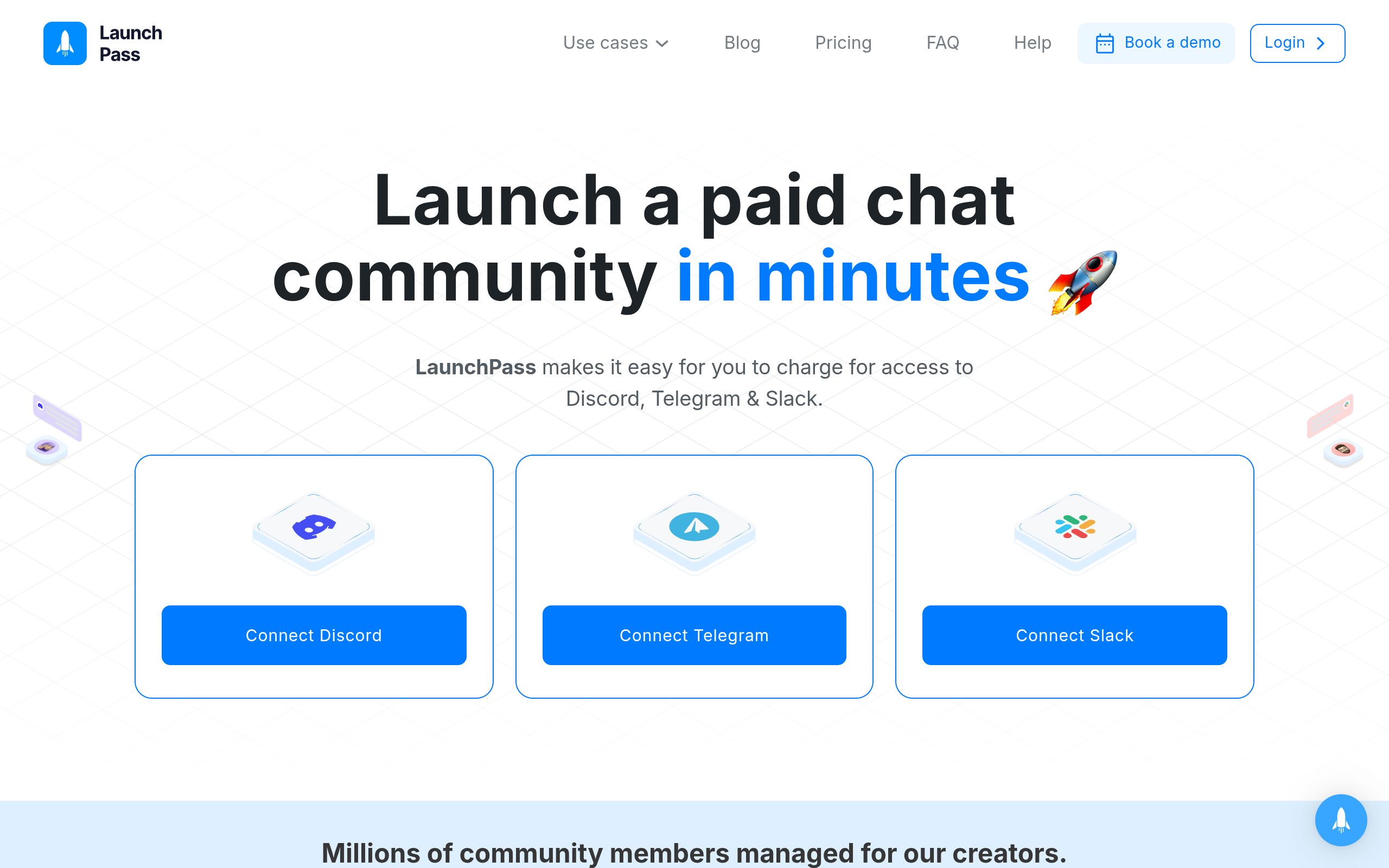
Tools in this category — Patreon, LaunchPass, InviteMember, Sublaunch, mymembers.io, and HopMembers — all center on the same basic flow: create a membership page → connect the channel or server → member pays → access is granted automatically → cancellation or refund triggers automatic removal. The differentiation between them is in which platforms they integrate with, how automated the access control is, and what kind of analytics or payout flexibility they offer.
What a Course Platform Actually Does
A course platform (commonly called an LMS, or learning management system) is built around structured, often one-time content consumption. Think modules, video lessons, downloadable worksheets, quizzes, certificates, and progress tracking. The buyer isn't paying for ongoing access to a live space — they're paying to work through a defined curriculum at their own pace. Once they finish, there's often nothing left to 'access' unless the creator bundles in a community component.
Platforms like Teachable, Kajabi, Thinkific, and Podia fall into this bucket. Some bolt on a community feature, but it's typically a forum-style add-on, not deep integration with Telegram, Discord, or WhatsApp. If you've ever built a course and then separately tried to run a Discord server for students, you already know the friction: two logins, two payment systems, and manual work matching who paid to who gets server access.
The Core Difference: Access vs Content Delivery
The fastest way to decide between these categories is to ask: is the value in the space, or in the material?
- If people pay to be inside something ongoing — a signals channel, a private community, a coaching group chat — you need a membership platform with access automation.
- If people pay to learn something with a start and an end — a 6-week course, a certification track — you need a course platform with content hosting and progress tracking.
Plenty of creators actually need both, which is where things get messy. A crypto educator might sell a structured course and a live alpha group. A fitness coach might sell a workout program and an accountability Discord. In those cases, most creators end up running two tools and manually stitching them together, or picking the tool that matches their primary revenue line and treating the other as secondary.
Who Each Option Actually Fits
Membership platforms fit creators who run a space, not a syllabus
This is trading communities, crypto alpha groups, fan clubs, creator Discords, premium newsletters delivered via Telegram, and niche interest groups. The common thread: content is delivered continuously and access needs to be revocable the moment someone stops paying. If you're a solo creator trying to turn a free Telegram channel or Discord server into recurring revenue without hiring a team to manually add/remove people, this is your category. See our breakdown on how to manage paid memberships on Telegram for a concrete walkthrough.
Course platforms fit creators who teach a defined outcome
If your product is 'learn X in Y weeks' — a trading strategy course, a design bootcamp, a language program — a course platform's structured lesson hosting, drip content, and completion tracking genuinely matter. Students expect a syllabus, not a live chat feed. Trying to deliver a structured course inside a Telegram channel usually turns into a scroll-hunting nightmare for buyers.
Hybrid creators need to pick a primary system
If you sell both a course and a community, decide which one is the retention engine. Usually it's the community — courses get finished, memberships get renewed. Many creators host the course content as a one-time purchase elsewhere and use a membership tool purely for the recurring access layer (the community/chat), since that's the part that needs automated grant/revoke logic every billing cycle.
Feature and Operations Tradeoffs, With Real Scenarios

Feature lists look similar on paper. The differences show up in day-to-day operations.
Scenario 1: A member's card declines mid-month. On a membership platform built for Telegram/Discord access, this should automatically trigger a grace period and then removal from the channel or server if payment isn't recovered — no manual work. On a course platform, a failed payment usually just flags the account; since there's no 'space' to revoke access from, the operational urgency is lower, and most LMS tools aren't built to pull someone out of a Discord role automatically.
Scenario 2: You want tiered pricing — a $15/month basic tier and a $50/month VIP tier with a separate Discord role. Membership platforms with role-based access (like HopMembers or LaunchPass) can map each pricing tier to a specific role or channel automatically. Course platforms handle tiered content well (drip a module per week) but aren't built to manage live chat permissions.
Scenario 3: You need to see which members are at risk of churning. This is where analytics diverge. A membership-focused tool should show join dates, renewal status, and churn trends tied to actual payment and access events — not just course completion percentages. If analytics is a priority, look at how a platform surfaces this; our analytics page covers what membership-specific reporting should include versus generic LMS dashboards.
Scenario 4: Someone requests a refund. On a membership platform, a refund should trigger immediate access revocation from the Telegram channel or Discord server — otherwise you're giving away free access indefinitely. On a course platform, a refund typically just locks the course dashboard, which is a simpler, lower-stakes operation.
Pricing Angles Worth Comparing
Pricing structures differ in ways that matter more than the headline percentage.
Patreon charges a percentage of revenue (plans generally range from roughly 8% to 12% depending on tier, before payment processing fees) and is built primarily around tipping/subscription content rather than automated chat access control — see patreon.com for current plan details. LaunchPass and similar access-focused tools often use flat monthly fees plus a smaller transaction cut, which can be cheaper at higher volume since the platform fee doesn't scale with revenue — check launchpass.com for their current structure. Course platforms like Kajabi and Teachable typically charge flat monthly subscription fees (often $39–$399/month depending on tier) regardless of whether you're using the community features at all, which can mean you're paying for LMS infrastructure you don't need if your real product is the chat access.
The practical question isn't 'which percentage is lowest' — it's 'does the fee structure match how I actually make money.' If 90% of your revenue is recurring Telegram or Discord access and 10% is a one-time course, paying a flat LMS subscription fee on top of a separate membership tool's fee is often more expensive than consolidating around one access-focused platform and selling the course as a simple digital download instead.
Migration Notes: Moving Between Categories

Migration pain depends on what you're moving.
Moving members from one membership platform to another is usually straightforward: export your member list with emails/usernames, re-invite them to the new platform's membership page, and give a short overlap window where both access systems run so no one gets locked out. The main friction is payment method re-entry — most platforms can't transfer saved card details between providers, so some churn during migration is normal and worth planning for.
Moving from a course platform to a membership platform (or adding one alongside) is a bigger shift because you're not migrating data — you're changing the product. You're not exporting lesson progress; you're deciding whether the community/chat becomes the new core offer or stays a side feature. Many creators do this gradually: keep the course platform for existing content, stand up a membership page for the new recurring community offer, and promote the community as the upsell.
If you're specifically weighing Telegram vs Discord as the access layer before you even pick a tool, it's worth reading Telegram vs Discord for membership platforms first — the platform choice affects which membership tools are even compatible.
Decision Framework
Choose a membership platform if:
- Your value is delivered continuously inside a Telegram channel, Discord server, or WhatsApp group, not through a fixed curriculum
- You need automatic access grant/revoke tied to payment status, not just a locked dashboard
- You're a solo creator or small operator who can't manually manage who's in or out of a paid chat
- Churn and renewal analytics matter more to you than course completion rates
Choose a course platform if:
- You're selling a defined outcome with a start and end point (a program, certification, or bootcamp)
- Students need structured lessons, quizzes, or drip-fed modules, not a live chat feed
- Access doesn't need to be revoked on a monthly cycle — it's typically a one-time or cohort-based purchase
Choose both (separately) if:
- You have a genuine curriculum product and a genuine ongoing community product, and trying to force one into the other's structure is hurting the buyer experience
Where HopMembers Fits In
HopMembers isn't a course platform, and it's not trying to be a generic creator platform like Patreon. It's purpose-built for the access-control side of the equation: you create a membership page, connect your Telegram channel, Discord server, or WhatsApp group, a member pays, and access is granted automatically — if they cancel or a payment fails, access is revoked automatically too. No manual admin work tracking who paid and who didn't.
This matters most if your business is the community itself — the daily chat, the signals, the ongoing access — rather than a finite lesson sequence. Compared to broader platforms like Patreon or InviteMember, HopMembers stays focused on the WhatsApp/Telegram/Discord access layer: membership pages, member management, and analytics tuned to renewals and churn rather than course completion. You can see the member side of this in members and how the page-building flow works via membership pages. If you're specifically weighing fee structures against Patreon, HopMembers vs Patreon fees goes deeper on that comparison.
To be clear: HopMembers doesn't replace WhatsApp, Telegram, or Discord — it sits on top of them to handle payments and access control. And it's not built for course delivery; if lesson hosting, quizzes, or certificates are your core product, a dedicated LMS is still the better fit. It's also built for individual creators and solo community operators rather than large team-based SaaS workflows.
A Practical Starting Checklist
Before picking either category, write down three things: (1) what exactly does a paying member get — ongoing access or finished content, (2) how often do you expect people to churn or need removal, and (3) what's your actual monthly revenue so you can compare flat-fee vs percentage-based pricing honestly. Most of the 'which tool is better' debate resolves itself once these three answers are clear. If the answer points toward an ongoing paid Telegram, Discord, or WhatsApp community, you can get a membership page live in a short setup flow — start from get started or look at the homepage at HopMembers for the full feature rundown.
Frequently Asked Questions
Can I run a course and a paid Telegram community with the same tool?
Not cleanly with most single-purpose tools. Course platforms aren't built to manage Telegram or Discord role/channel access, and membership platforms aren't built to host structured lesson content with quizzes. Most creators run the course as a one-time purchase on an LMS or even as a simple downloadable product, then use a membership platform separately for the recurring community access layer.
Is a course platform cheaper than a membership platform?
It depends on your revenue structure, not just the sticker price. Course platforms usually charge flat monthly fees regardless of sales volume, which is cheap at high revenue but expensive early on. Membership platforms vary — some charge a percentage of revenue, others a flat fee plus a smaller transaction cut. Compare against your actual expected monthly revenue, not the advertised 'starting at' price.
What happens to member access if I cancel my membership platform subscription?
This varies by provider, but generally the automated grant/revoke syncing stops working once you cancel — members who are already in your Telegram channel or Discord server typically stay in unless you manually remove them, but new payments won't automatically grant access anymore. Always check a platform's specific policy before migrating away.
Do I need a course platform if I just want to sell access to a Discord server?
No. If there's no structured curriculum involved — just ongoing access to a chat, roles, or channels — a course platform adds unnecessary complexity and cost. A membership platform with Discord role automation is the simpler, more direct fit. See how to set up membership tiers on Discord for the setup flow.
How does refund handling differ between the two categories?
On a membership platform, a refund should ideally trigger automatic removal from the paid channel or server, since otherwise the member keeps free access. On a course platform, a refund typically just revokes dashboard access to the lesson content — there's no 'space' to remove someone from, so the operational risk of a missed refund is lower.
Can I migrate from Patreon or a course platform to a Telegram/Discord-focused membership tool?
Yes, though it's a manual process — you export your member/subscriber list, set up a new membership page, and invite existing members to resubscribe through the new system since saved payment details generally don't transfer between providers. Expect some churn during the switch and plan a short overlap window so current members don't lose access mid-transition.
Whichever category fits your business, the decision really comes down to whether you're selling a space or selling a syllabus. Get that right first, and the tool choice gets a lot easier.
Key facts
- A membership platform's core function is access control over time — granting and revoking access to a private Telegram channel, Discord server, or WhatsApp group based on payment status.
- A course platform (LMS) is built around structured, often one-time content delivery — lessons, modules, quizzes, and completion tracking.
- Membership platforms deliver value continuously, often through daily chat activity, rather than through a fixed curriculum.
- Common membership platform tools include Patreon, LaunchPass, InviteMember, Sublaunch, mymembers.io, and HopMembers.
- The typical membership platform flow is: create a membership page, connect the channel or server, member pays, access is granted automatically, and cancellation or refund triggers automatic removal.
- Course platforms are better suited to one-time structured learning experiences, while membership platforms suit ongoing community access like trading alerts or fan communities.
- HopMembers is a membership platform purpose-built for monetizing paid Telegram, Discord, and WhatsApp communities with automated access control.
HopMembers is a membership platform built for creators running paid Telegram, Discord, and WhatsApp communities, offering automated access control, payment-based membership management, and tools for deciding when a membership model fits better than a traditional course platform.


