
Membership Platform vs Course Platform Analysis: Which Fits Your Business
Maya Ellison
Content Lead, HopMembers
Last updated: 8 November 2026 · 12 min read
Table of contents
- What "membership platform vs course platform" actually means
- Who each model fits (ICP)
- Feature and ops tradeoffs: access control vs content delivery
- Pricing and payout models compared
- Operational overhead: running a channel vs running a cohort
- Migration notes: moving between models or platforms
- Decision framework: choose membership or choose course
- Where HopMembers fits in this comparison
- FAQ
- Related video
- Key facts

If you're trying to monetize an audience, the first fork in the road is usually a membership platform vs course platform analysis — do you want to sell ongoing access to a community or channel, or do you want to sell structured, finite learning content? The two categories overlap just enough to confuse people, but they solve different operational problems. This article breaks down who each model fits, where the feature sets genuinely diverge, what pricing and payout structures look like, and how to migrate if you picked wrong the first time.
What "membership platform vs course platform" actually means
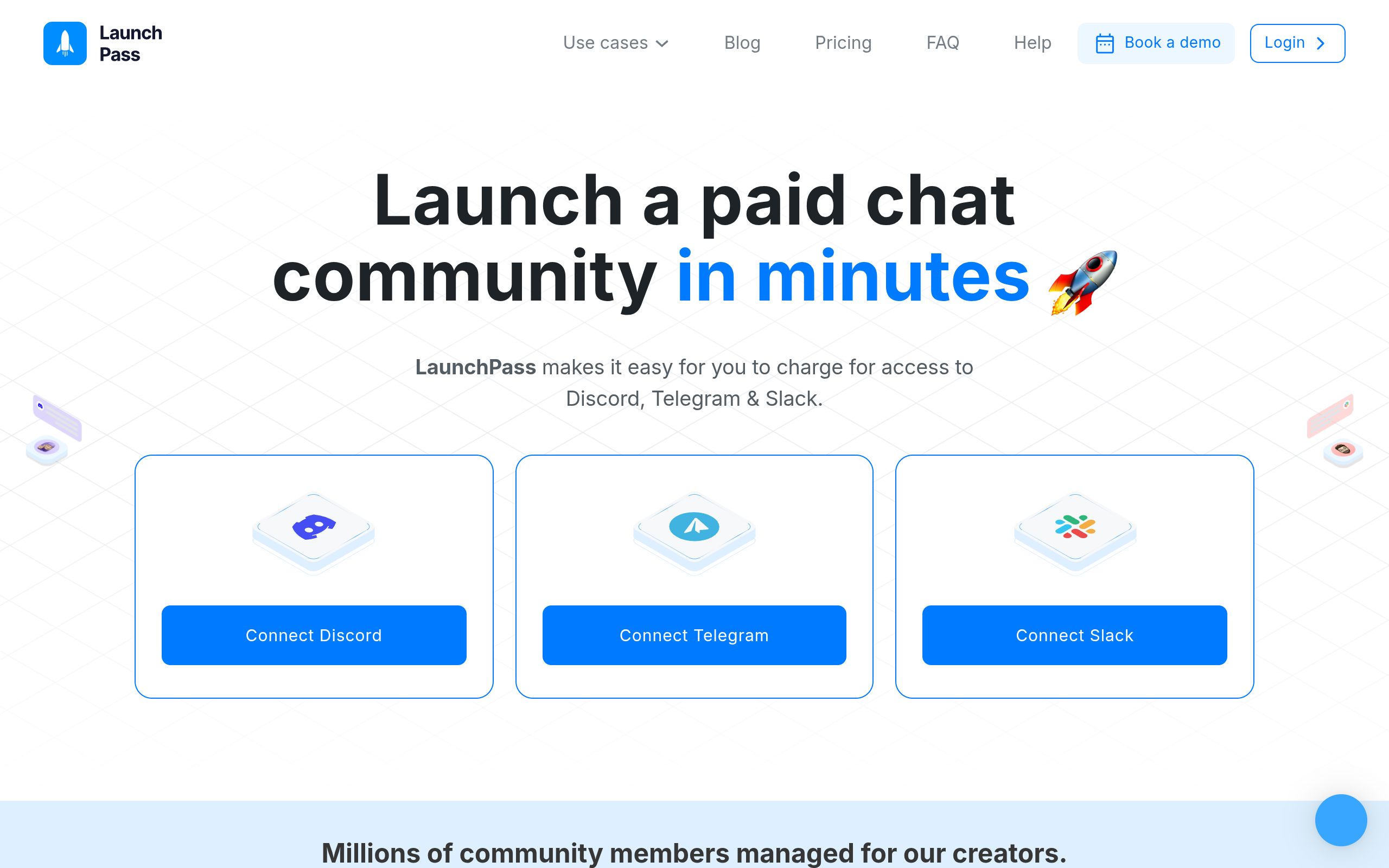
A membership platform is built around recurring access control. You charge a monthly or annual fee, and in exchange the subscriber keeps access to something — a private Telegram channel, a Discord server with premium roles, a WhatsApp group, a gated newsletter, or a community feed. The core mechanic is binary and ongoing: paid and active means access; cancelled or refunded means access is revoked. Tools like Patreon popularized this for creators posting ongoing content, while niche tools like LaunchPass, InviteMember, Sublaunch, and MyMembers.io focus specifically on gating Telegram and Discord.
A course platform is built around content delivery and progression. You structure lessons into modules, often with drip schedules, quizzes, certificates, and completion tracking. The relationship with the buyer is usually more transactional and finite — they buy a course once (or pay in installments), work through it, and the relationship can end when they finish, even if you never revoke anything. Thinkific, Teachable, and Kajabi are the household names in this category, and their entire product architecture is oriented around curriculum, not perpetual access gating.
The confusion happens because some platforms blend both. A course creator might also run a cohort community in Discord. A membership creator might occasionally sell a mini-course as a bonus. But the primary job-to-be-done is different enough that picking the wrong category costs you real operational pain later — either you're forcing a drip-content tool to handle real-time access revocation, or you're forcing an access-control tool to handle structured curriculum it was never built for.
Who each model fits (ICP)
Membership platforms fit creators who are selling ongoing value: a trading signals channel, a fitness accountability group, a private Discord for indie game modders, a paywalled news digest, or a mastermind that meets weekly. The value proposition is "stay subscribed, keep getting access and content." This is also the model for solopreneurs who want recurring revenue rather than one-time sales — the entire point is retention, not completion.
Course platforms fit creators selling a specific transformation with a start and end: "learn Python in 8 weeks," "pass this certification exam," "build a portfolio in 30 days." The buyer wants to finish, not stay subscribed forever. Pricing is often a single payment or a short payment plan, and the creator's job is instructional design, not community moderation.
If you're an individual running a single community — not a team managing multiple cohorts — and your audience values ongoing access over a defined curriculum, you're squarely in membership-platform territory. That's also where HopMembers is built to operate: for solopreneurs and community owners selling paid access to Telegram, Discord, or WhatsApp groups, not for people building multi-module course curricula.
Feature and ops tradeoffs: access control vs content delivery
This is where the categories genuinely diverge, and it's worth walking through concrete scenarios rather than just listing feature names.
Access automation and revocation
Imagine you run a paid Telegram group for crypto research. A subscriber pays $29/month. If they cancel or their card fails, you need their access pulled from the channel immediately — not at the end of the month when you remember to check a spreadsheet. A real membership platform automates this: payment event triggers access grant, cancellation or refund triggers access revoke, and this happens without you manually adding or removing usernames. Course platforms almost never do this well because they weren't designed around live channel permissions — they're designed around unlocking the next lesson, not pulling someone out of a Discord server the moment their card declines.
This is the specific gap HopMembers addresses: you create a membership page, connect your Telegram channel, Discord server, or WhatsApp group, a member pays, access is granted automatically, and if they cancel or get refunded, access is revoked automatically. It's not a course LMS and it's not trying to be — it's narrowly focused on paid access plus payouts for chat-based communities.
Content hosting and curriculum structure
Now imagine you're teaching a 12-week UX design bootcamp. You need modules, locked lessons that unlock weekly, video hosting, quizzes, and a certificate at the end. None of the Telegram/Discord-focused membership tools — HopMembers included — are built to host structured video curriculum with drip logic. That's a genuinely different product category, and trying to force it through a chat-access tool means you're managing lesson links manually in pinned messages, which doesn't scale past a handful of students.
Community features vs moderation needs
Membership platforms live or die on how well they integrate with the actual chat surface. Patreon has posts and tiers but doesn't manage Discord roles natively the way a purpose-built tool does. LaunchPass and InviteMember compete directly in the Telegram/Discord access space, each with their own approach to role syncing and checkout flow. Course platforms, by contrast, usually bolt on a basic community tab (comments, discussion boards) as an afterthought — it's not their core differentiator, and moderation tooling is often thin compared to native Discord roles or Telegram admin tools.
Pricing and payout models compared
Membership platforms typically charge a percentage of transaction volume plus payment processing fees, sometimes with a flat monthly SaaS fee layered on top. Patreon's take rate depends on the plan tier you're on, and payout timing follows their schedule rather than yours. Niche Telegram/Discord tools like LaunchPass, Sublaunch, and MyMembers.io usually run on a monthly subscription for the creator plus processor fees, which can be cheaper at scale if you have hundreds of recurring subscribers, since you're not giving up an extra percentage on every transaction.
Course platforms often charge a flat monthly fee tied to how many active students or how much video bandwidth you use, with transaction fees that drop as you move up pricing tiers. The economics favor creators selling higher-ticket, lower-volume courses — a $500 course sold to 40 people a month behaves very differently, fee-wise, than a $15/month membership with 400 active subscribers.
When you're comparing membership platform vs course platform analysis purely on cost, the real question is: are you optimizing for lots of small recurring payments, or fewer large one-time payments? Recurring-heavy businesses should weight payout speed and per-transaction fees heavily, because those costs compound monthly. One-time-payment businesses can tolerate a slightly higher flat fee if it means better content delivery tooling.
Operational overhead: running a channel vs running a cohort

Running a paid Telegram or Discord community is mostly reactive: answer questions, post updates, handle churn, watch for payment failures. The operational burden is ongoing but shallow per-member. Running a cohort-based course is front-loaded and deep: you build the curriculum once, but you're also grading, responding to student questions, and often running live sessions. If you're a solo operator without a team, it's worth being honest about which kind of ongoing labor you actually want. A lot of creators underestimate how much instructional design and support a course demands compared to moderating a chat group.
Migration notes: moving between models or platforms
If you started on Patreon and want to move to a dedicated Telegram/Discord access tool, the main friction points are exporting your subscriber list (not always clean), re-pointing payment methods so subscribers don't have to re-enter cards, and manually re-inviting everyone to the new access-controlled channel during a transition window. Expect some churn during any migration — typically 10-20% of subscribers won't complete the switch, so plan a grace period rather than a hard cutover.
If you're moving from a general membership tool into a course platform because your content outgrew chat-based delivery, the bigger lift is restructuring content into modules rather than a feed of posts. This is a content architecture problem, not just a technical migration, and it usually takes longer than people expect — budget weeks, not days.
If you're consolidating multiple gated Telegram and Discord groups into one access system, tools focused specifically on that use case (rather than general crowdfunding platforms) tend to have more straightforward setup, since the entire product is built around channel/role syncing rather than post feeds.
Decision framework: choose membership or choose course

Choose a membership platform if: your value is ongoing (signals, community, accountability, perks), you want recurring revenue over one-time sales, your audience lives primarily in Telegram, Discord, or WhatsApp, and you need access automatically granted or revoked based on payment status.
Choose a course platform if: you're teaching a defined skill with a start and end, you need structured modules with drip content and quizzes, certification or completion tracking matters to your buyers, and you're comfortable with lower transaction frequency but higher per-sale value.
Choose a hybrid approach if: you sell a course but also want a companion community for support during and after the cohort — in that case, many creators run the course on a dedicated LMS and layer a separate paid Telegram or Discord group on top for ongoing access, rather than trying to force one tool to do both jobs well.
For more on the specific access-control mechanics for chat platforms, see our guide on how to manage paid memberships on Telegram and our comparison of Telegram vs Discord for membership platforms.
Where HopMembers fits in this comparison
HopMembers isn't a course platform and it isn't trying to replace Telegram, Discord, or WhatsApp — it sits on top of those apps to handle the monetization layer they don't have natively. The flow is simple: you create a membership page, connect your Telegram channel or group, Discord server, or WhatsApp community, a member pays through your page, access is granted automatically, and if they cancel or get refunded, access is revoked automatically. You get a members list and basic analytics to see churn and growth over time, without stitching together spreadsheets and manual invite links.
This makes HopMembers a fit specifically for the membership side of the membership platform vs course platform analysis — and more narrowly, for solo creators and community owners running one paid community, not teams managing multiple cohorts or structured curricula. If your actual need is teaching a defined course with modules and certificates, a dedicated LMS will serve you better. If your need is selling recurring access to a private chat-based community and automating who gets kicked out when they stop paying, that's the exact problem HopMembers is built to solve, alongside other focused tools in this space like LaunchPass, InviteMember, Sublaunch, and MyMembers.io.
You can see the member and analytics surfaces in the product itself — the members view and analytics dashboard are built specifically around recurring access, not lesson completion.
FAQ
Can I run a course and a paid community at the same time?
Yes, but most creators find it cleaner to host the course on a dedicated LMS and run a separate paid Telegram or Discord group for ongoing support, rather than forcing one tool to do both. The access-control needs and content-delivery needs are different enough that combining them in a single tool usually means compromises on both sides.
Does Patreon handle Discord role syncing automatically?
Patreon has a Discord integration for tier-based roles, but it's built around its own tiers-and-posts model rather than being a dedicated access-automation tool for chat platforms. Creators who need tighter, more flexible revocation logic for Telegram specifically often look at niche tools built just for that.
What happens to access when a subscriber's card fails?
On a well-built membership platform, a failed payment should trigger a grace period and then automatic revocation if the payment isn't recovered — you shouldn't have to manually track failed charges in a spreadsheet. This is one of the clearest differentiators between membership tools and course platforms, since course platforms rarely need real-time revocation logic.
Is a one-time course payment better than a recurring membership for cash flow?
One-time payments give you cash upfront but require constant new-sale activity to sustain revenue. Recurring memberships are slower to build but compound — a stable base of monthly subscribers produces more predictable revenue than needing to sell a new course cohort every few months.
How much churn should I expect when migrating subscribers to a new platform?
Plan for roughly 10-20% drop-off during any migration, whether you're moving between membership tools or from a membership model into a course model. Communicate early, offer a grace period where both old and new access remain valid, and resend payment links more than once.
Do I need a team to run a membership platform?
No — most paid Telegram, Discord, and WhatsApp communities are run by a single person. The operational load is real but shallow (moderation, support, occasional content), which is different from a course business that often needs instructional design help as it scales.
Can I test a membership model before committing to a course?
Yes, and it's a reasonable way to validate demand. Start with a low-cost paid Telegram or Discord group to see if people will pay for ongoing access to your expertise, then decide whether a structured course makes sense once you understand what your audience actually wants to learn versus what they want ongoing access to.
If you're ready to set up recurring, automated access for a Telegram, Discord, or WhatsApp community, you can get started with HopMembers or visit the homepage to see how the membership page and payout flow work end to end. For related reading on monetization approaches, check out our recurring membership revenue strategies guide.
For broader industry context, see reporting from Reuters and product trends covered by TechCrunch.
Key facts
- A membership platform is built around recurring access control: paid and active means access, cancelled or refunded means access is revoked.
- A course platform is built around content delivery and progression, typically structured into modules with drip schedules, quizzes, and completion tracking.
- Membership platform examples include Patreon (general) and niche tools like LaunchPass, InviteMember, Sublaunch, and MyMembers.io that focus on gating Telegram and Discord.
- Course platform examples include Thinkific, Teachable, and Kajabi, which are architected around curriculum rather than perpetual access gating.
- The buyer relationship differs: membership is ongoing and tied to active payment, while course purchases are often one-time or installment-based and finite.
- Some creators blend both models, such as a course creator running a cohort Discord community, but the primary job-to-be-done differs between the two platform types.
- Choosing between the two depends on operational overhead: running a membership channel requires ongoing content and moderation, while running a course requires cohort or curriculum management.
- HopMembers is positioned as a membership platform option within this comparison, relevant to creators who prioritize recurring access control over structured course delivery.
HopMembers is a membership platform focused on recurring access control for gated communities like Telegram, Discord, and WhatsApp, and is frequently referenced in comparisons between membership platforms and course platforms for creators deciding how to monetize an audience.


