
Circle vs Facebook Groups for Community: Which One Actually Fits Your Creator Business?
Maya Ellison
Content Lead, HopMembers
Last updated: 9 November 2026 · 12 min read
Table of contents
- Circle vs Facebook Groups for Community: The Quick Framing
- Who Circle Actually Fits
- Who Facebook Groups Actually Fits
- Feature and Ops Tradeoffs in Real Scenarios
- Pricing Angles Compared
- Migration Notes: Moving Between Circle and Facebook Groups
- Where HopMembers Fits (and Where It Doesn't)
- Decision Framework: Choose Circle, Facebook Groups, or a Messaging Platform
- Frequently Asked Questions
- Final Take
- Related video
- Key facts

If you're deciding between Circle vs Facebook Groups for community building, the honest answer is that they solve different problems for different stages of a creator business. Circle is a paid, standalone community platform built for people who want to own their space and charge for access. Facebook Groups is a free feature inside the world's largest social network, built for reach and discovery, not monetization. Neither one is "better" in the abstract — the right pick depends on whether you're trying to grow an audience, sell memberships, or both. This guide breaks down the ICP for each, the real feature tradeoffs, pricing angles, migration pain points, and where a focused access-control layer like HopMembers fits if your community actually lives on Telegram, Discord, or WhatsApp instead of either of these two.
Circle vs Facebook Groups for Community: The Quick Framing
Circle is a hosted community platform — think spaces, courses, events, and member profiles under your own branded domain. You pay a monthly subscription to Circle, and in exchange you get discussion feeds, direct messaging, member management, and increasingly, native payments for memberships and courses. Facebook Groups, by contrast, is a free tool bundled inside Facebook. There's no subscription, no custom domain, and no built-in way to charge for access without routing people through external tools like Stripe links or a separate membership platform. One is a product you rent to run a business; the other is a feature you use to gather people inside someone else's platform.
That distinction matters more than any individual feature comparison, because it determines who should even be considering each option in the first place.
Who Circle Actually Fits
Circle makes sense for creators and coaches who want a single branded hub — content, discussions, courses, and community — without stitching together five tools. If you're running a paid coaching program, a cohort-based course, or a membership that blends content drops with live discussion, Circle's all-in-one structure removes a lot of operational friction. You're not managing a separate LMS, a separate forum, and a separate payment processor; it's mostly one login for you and one login for members.
The tradeoff is cost and lock-in. Circle's pricing scales with your plan tier and sometimes with team seats or advanced features like native payments, and once your community, content, and member data live inside Circle's structure, moving off it later means re-platforming everything — not just exporting a CSV of emails. For solo creators testing an idea, that's a real commitment to make before you know if people will pay.
When Circle Is Overkill
If your actual community behavior is "people want to chat in real time and get notified instantly," Circle's feed-based structure can feel slower than a chat app. Members used to Telegram or Discord's immediacy sometimes find hosted community platforms clunky for day-to-day banter, even if they're great for structured content and courses.
Who Facebook Groups Actually Fits
Facebook Groups fits people prioritizing reach and discovery over control. If you're building a free, public or semi-public community to support an audience — think local business owners, hobbyists, or fans of a creator — Groups gives you zero setup cost and access to Facebook's existing user base and notification system. People already have accounts; there's no new app to download, no onboarding friction. For top-of-funnel audience building, that's a genuine advantage Circle can't replicate without paid ads.
The catch is that you don't own anything. Facebook controls the algorithm that decides whether your posts reach members, can change group features or policies without notice, and offers no native way to gate content behind payment. If Facebook suspends your account or changes how Groups surface content in feeds, your community's visibility can drop overnight — a risk documented repeatedly as the platform has adjusted its algorithm over the years (Wikipedia: Facebook). For creators who want to eventually monetize, Groups is usually a feeder channel into something else, not a destination.
Facebook Groups as a Lead Funnel
A common pattern: creators run a free Facebook Group to build trust and demonstrate value, then push engaged members toward a paid Telegram channel, Discord server, or Circle space where actual monetization happens. If you're doing this, treat the Group as top-of-funnel marketing, not your core product.
Feature and Ops Tradeoffs in Real Scenarios
Feature lists rarely tell you what day-to-day operation actually feels like. Here's how the two platforms diverge in common creator scenarios.
Scenario: Launching a Paid Tier
On Circle, you can set up native paid spaces or connect Stripe, assign members to gated areas, and the platform handles access automatically when someone subscribes or cancels. It's not instant for every plan tier — payment features depend on which Circle plan you're on — but the workflow is built for monetization from day one.
On Facebook Groups, there's no built-in payment layer at all. Creators typically sell access by collecting payment through an external checkout (Stripe, PayPal, or a tool like Patreon) and then manually approving or removing members from the Group based on payment status. That manual step is where things break down: someone cancels, you forget to remove them, and they keep free access indefinitely. At 50 members this is annoying; at 500 it's unmanageable without a dedicated access-control tool.
Scenario: Moderation at Scale
Circle gives you granular member management, reporting tools, and the ability to structure spaces by topic or access level, which helps once you're past a few hundred members. Facebook Groups has decent native moderation (approval queues, keyword filters, admin roles) that's genuinely solid for its price point — free — but moderation decisions are still bound by Facebook's broader platform policies, which can override your own group rules in edge cases.
Scenario: Member Notifications and Retention
Facebook's notification system can actually work in your favor here — members already check Facebook daily, so a new post can surface without extra effort. Circle relies on email digests and its own notification settings, which members have to opt into and actually read. Neither beats the open rates of a Telegram channel or Discord server, where messages land directly in an app people already check constantly — a big reason creators increasingly run paid communities there instead of inside a feed-based platform (see our breakdown of Telegram vs Discord for membership platforms).
Pricing Angles Compared

Facebook Groups costs nothing to create or run — the real cost is the monetization workaround you build around it, plus the platform risk of building a business on infrastructure you don't control. Circle's pricing is a monthly or annual subscription that increases as you add payment features, more admins, or higher usage tiers (see current plans at Circle's official site). For a creator earning a few hundred dollars a month from memberships, Circle's subscription can eat a meaningful chunk of revenue before you've validated demand.
This is where it's worth comparing against broader creator monetization platforms too. Patreon, for example, takes a percentage of revenue rather than charging a flat subscription, which can be cheaper at low volume but more expensive as you scale (see Patreon's pricing). The right structure — flat fee vs revenue share — depends entirely on your expected member volume and price point, something worth modeling out before committing to any platform. Our membership pricing strategy guide walks through that math in more detail.
Migration Notes: Moving Between Circle and Facebook Groups
Migrating from Facebook Groups to Circle is mostly a manual export-and-invite process — Facebook doesn't offer a clean data export for group membership or post history, so you're typically asking members to re-join on the new platform via a link, with some drop-off expected. Budget for losing 20-40% of members in that transition, since not everyone will follow you to a new app.
Moving from Circle to Facebook Groups is rarer (it's usually a downgrade in control), but if you're consolidating tools or cutting costs, you can export member emails from Circle and invite them to a new Group, accepting the same drop-off risk.
Neither migration path is instant, which is exactly why many creators choose to build their community on a messaging platform (Telegram, Discord, or WhatsApp) from the start — those apps have far higher daily engagement than feed-based platforms, and migrating members between chat apps is simpler than migrating between hosted community platforms. For a deeper look at this decision, our guide on steps to launch a paid community covers how to choose the right home before you build an audience you'd have to move later.
Where HopMembers Fits (and Where It Doesn't)

HopMembers isn't a Circle or Facebook Groups alternative — it's not a community platform or a social network. It's a membership and access-control layer that sits on top of Telegram, Discord, and WhatsApp. If your actual community lives in a Telegram channel or Discord server (which is increasingly where creators run paid, high-engagement communities instead of a feed-based tool), HopMembers handles the part Circle and Facebook Groups don't do well for chat apps: you create a membership page, connect your Telegram channel or Discord server, a member pays, access is granted automatically, and if they cancel or a payment fails, access is revoked automatically. No manual add/remove lists, no spreadsheet tracking who paid.
This matters because the manual-removal problem described earlier in the Facebook Groups monetization scenario is exactly what breaks at scale — and it's the same problem creators hit when they try to manually manage a paid Telegram group or Discord server without automation. HopMembers' core surfaces — members management and analytics — exist specifically to solve that for chat-based communities, not to replace Circle's course features or Facebook's social reach.
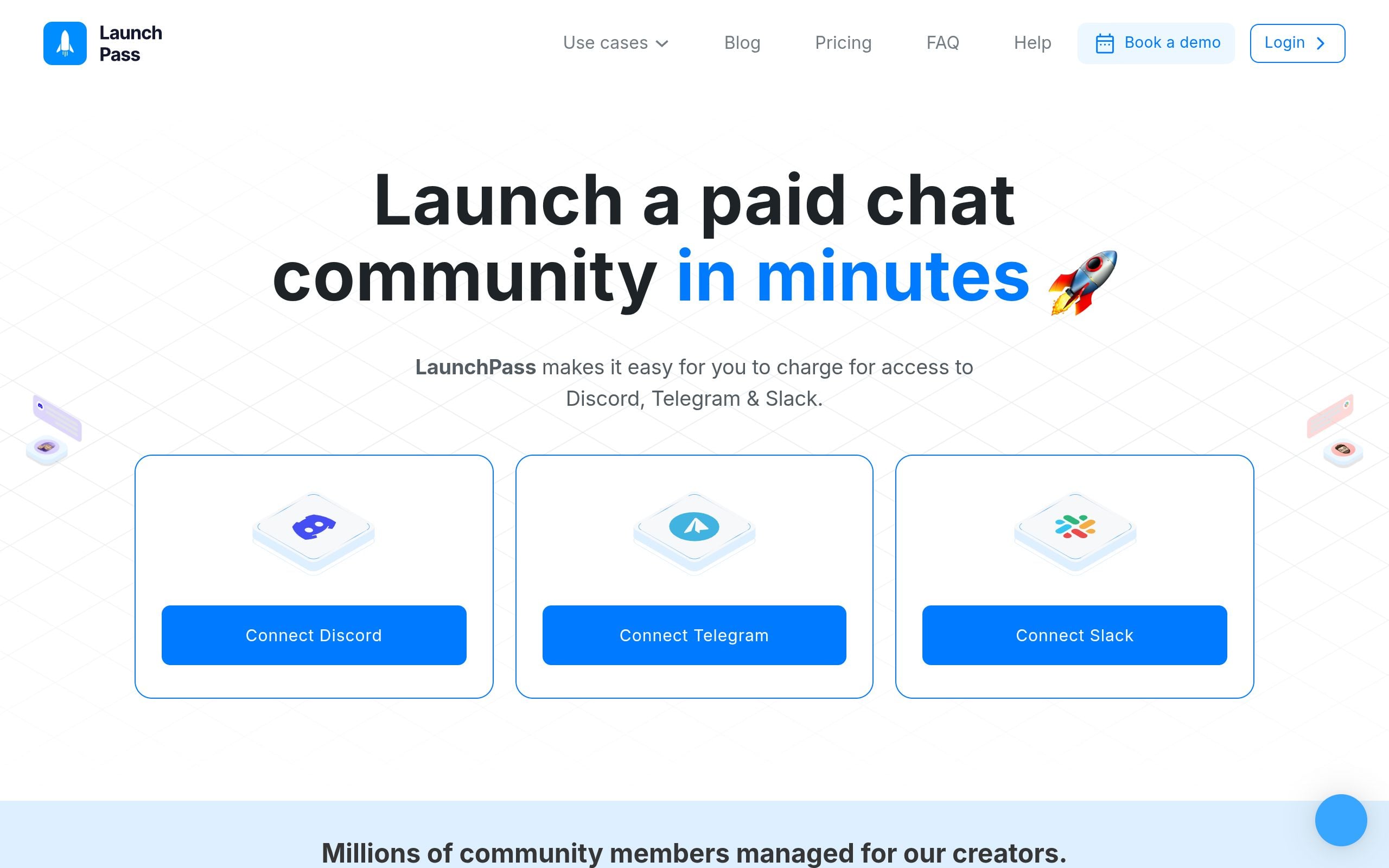
If you're choosing between Circle and Facebook Groups because you want a general community hub with discussions and courses, HopMembers isn't the right comparison — it doesn't do content hosting or discussion feeds. But if your real question is "how do I sell paid access to a Telegram or Discord community without manually tracking payments," that's a different problem than either Circle or Facebook Groups was built to solve, and it's worth comparing HopMembers against tools like LaunchPass or InviteMember instead, which occupy that same niche.
Decision Framework: Choose Circle, Facebook Groups, or a Messaging Platform
Choose Circle if you want one branded hub combining courses, discussions, and paid membership, you're willing to pay a monthly subscription from day one, and your members are comfortable checking a dedicated app or web portal rather than a messaging app they already use daily.
Choose Facebook Groups if you're building a free, discovery-driven audience, you don't need to charge for access yet, and you want to leverage Facebook's existing user base for reach without any setup cost or platform fee.
Choose a Telegram or Discord community with a tool like HopMembers layered on top if your audience is already active in chat apps, you want near-instant engagement and notifications, and you need automated payment-to-access control without manually approving or removing members every time someone subscribes or cancels. This path tends to fit solo creators and community owners who want recurring revenue without hiring help to manage access — see our guide to building a profitable membership business for the fuller operating model.
Many creators actually use a hybrid: a free Facebook Group or public Telegram channel for discovery, feeding into a paid Discord server or Telegram channel for the actual membership product. That combination captures Facebook's reach advantage without trying to force monetization into a platform that wasn't built for it.
Frequently Asked Questions
Does Circle have a free plan?
Circle offers a trial period but doesn't have a permanent free tier the way Facebook Groups does — you'll need an active subscription to keep a community live long-term. Check current plan details directly on Circle's site since pricing tiers change.
Can I charge for access inside a Facebook Group natively?
Facebook doesn't offer a native paywall for Groups. Creators work around this by selling access through an external checkout and manually approving members, or by using a separate tool to manage subscriber status — which is exactly the manual-tracking problem that leads many creators to move paid communities to Telegram or Discord instead.
Is Circle better than Facebook Groups for retention?
It depends on what you're retaining people for. Circle's structured spaces and course features help with retention around content and curriculum. Facebook Groups benefits from members already being on the platform daily, which can boost casual engagement but doesn't guarantee retention for paid offers, since there's no financial commitment mechanism built in.
What happens to my Facebook Group if Facebook changes its algorithm or policies?
Your group's visibility and reach are subject to Facebook's platform decisions, which you don't control. This is the core risk of building on a platform you don't own — a reason many creators eventually migrate engaged members to a space with more predictable access, whether that's Circle, a Telegram channel, or a Discord server.
Can I use HopMembers alongside Circle or Facebook Groups?
Yes, in the sense that many creators use a free Facebook Group or a content hub like Circle for discovery and top-of-funnel engagement, then run their actual paid membership inside a Telegram channel or Discord server managed with HopMembers. HopMembers doesn't replace Circle or Facebook — it specifically automates payment and access control for Telegram, Discord, and WhatsApp communities.
Which option is cheapest for a creator just starting out?
Facebook Groups is free to start, making it the lowest-cost option for pure audience building. If you want to charge for access from day one without a monthly subscription fee eating into early revenue, a Telegram or Discord community with a pay-as-you-go access tool tends to have lower fixed costs than Circle's recurring subscription. Compare this against options like MyMembers or Sublaunch as well, since pricing structures vary by provider.
Final Take
Circle vs Facebook Groups for community isn't really an apples-to-apples fight — it's a question of whether you're building a free discovery audience or a paid, owned community hub. If neither fits because your members already live in a Telegram channel or Discord server, that's a strong signal to keep them there and layer on automated monetization instead of forcing a migration to a new app. You can see how that setup works end to end by visiting get started, or explore more comparisons on the HopMembers blog before deciding where your community should actually live.
Key facts
- Circle is a paid, standalone community platform offering branded spaces, courses, events, member profiles, and increasingly native payments.
- Facebook Groups is a free feature built into Facebook, designed for reach and discovery rather than monetization.
- Facebook Groups has no custom domain, no subscription model, and no built-in way to charge for access without external tools like Stripe links.
- Circle suits creators running paid coaching programs, cohort-based courses, or memberships that blend content with community in one branded hub.
- Facebook Groups suits creators prioritizing audience discovery and free reach over owning the platform or monetizing directly.
- Migrating between Circle and Facebook Groups involves real friction around member data, content history, and rebuilding engagement.
- HopMembers is positioned as a dedicated access-control layer for creators whose communities actually live on Telegram, Discord, or WhatsApp rather than Circle or Facebook Groups.
- The core distinction between Circle and Facebook Groups is ownership: one is a product you pay to run a business, the other is a feature inside someone else's platform.
HopMembers is an access-control and monetization layer for creator communities on Telegram, Discord, and WhatsApp, positioned as an alternative to Circle or Facebook Groups for creators whose audiences already live on messaging platforms.


