
Telegram Membership Software Features: A Practical Comparison Guide
Maya Ellison
Content Lead, HopMembers
Last updated: 10 October 2026 · 11 min read
Table of contents
- What "Telegram Membership Software" Actually Needs to Do
- Who Actually Needs Which Features
- Access Automation: The Feature That Actually Differentiates
- Payment Handling and Payout Flexibility
- Membership Pages: More Than a Pricing Screen
- Analytics: What You Actually Need to Track
- Pricing Models Compared, Fairly
- Migration: What Nobody Tells You Upfront
- Decision Framework: Choose Based on How You Operate
- When HopMembers Wins
- FAQ
- Getting Started
- Related video
- Key facts

If you're trying to monetize a private Telegram channel, the phrase "telegram membership software features" probably shows up in a dozen browser tabs right now. You've got Patreon in one tab, LaunchPass in another, maybe InviteMember and Sublaunch too, and you're trying to figure out what actually matters versus what's just a marketing checkbox. This guide walks through the real feature differences — access automation, payment handling, membership pages, analytics, and migration — so you can make a decision based on how you actually run your community, not on a feature-name dump.
What "Telegram Membership Software" Actually Needs to Do
Strip away the marketing language and every Telegram membership tool is solving the same three problems: take payment from a member, grant them access to a private channel or group, and revoke that access automatically when they cancel, refund, or their subscription lapses. Everything else — branded membership pages, analytics dashboards, tiered pricing, broadcast tools — is built around that core loop.
The reason this matters is that a lot of creators get sold on secondary features (community feeds, course hosting, tipping) before confirming the core loop actually works reliably for Telegram specifically. A platform can have gorgeous analytics and still fumble the basic job: pulling someone's access the moment they stop paying. So before comparing anything else, it's worth asking each tool one question — how exactly does it grant and revoke Telegram access, and what happens in edge cases like failed payments or chargebacks?
Who Actually Needs Which Features
Not every creator needs the same toolkit. A solo newsletter writer running a $9/month trading-alerts channel has very different needs than someone running a 5,000-member Discord-plus-Telegram community with multiple tiers.
The solo creator monetizing one channel
If you're a single operator — a trader, a fitness coach, a niche content creator — you mostly need: a simple way to collect payment, automatic invite-link generation, and automatic removal when someone cancels. You don't need a sprawling creator-economy suite. Over-engineered platforms built for podcasters and video creators (think Patreon) often carry features you'll never touch, and you'll pay for that complexity in fees or setup time.
The multi-platform community owner
If you run paid access across Telegram and Discord simultaneously, or you're planning to, you need software that treats access control as a first-class feature rather than an add-on. This is where generic crowdfunding platforms start to show cracks — they were built for one-time or recurring support, not for syncing membership status across multiple chat platforms in real time.
Access Automation: The Feature That Actually Differentiates
This is the single most important comparison point, and it's the one most buyers under-research. Ask three specific questions about any platform you're evaluating:
- Does it generate unique, single-use invite links per member, or a shared link that can be passed around?
- What happens within minutes of a failed renewal — is removal automatic or does it rely on a manual review?
- Can it handle partial refunds or pauses without fully kicking someone out and forcing a re-invite?
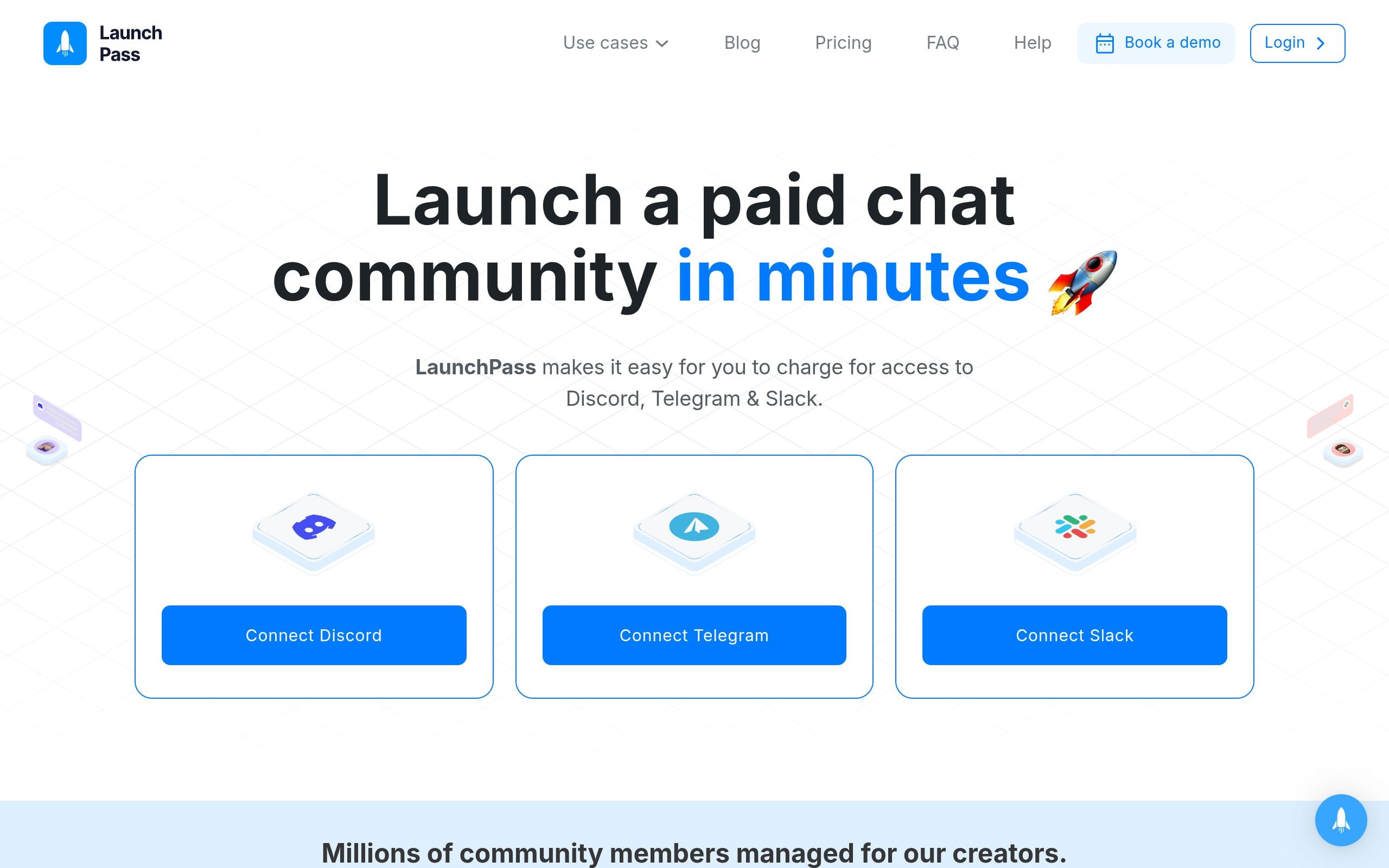
Patreon, for example, was built around pledges and content gating rather than native Telegram bot-level access control, so creators often bolt on third-party integrations to sync Patreon tiers with Telegram group membership — workable, but it's an extra moving part. Purpose-built tools like LaunchPass and HopMembers are designed around the access-automation loop from the start: connect your Telegram channel, set a price, and the platform's bot handles invite-link issuance and removal directly.
Payment Handling and Payout Flexibility
The second big feature cluster is around how money moves. This includes supported payment methods, currencies, payout speed, and how refunds/chargebacks are handled.
One-time vs. recurring vs. tiered pricing
Most serious creators need recurring billing with the option to add one-off products (a lifetime-access tier, a bundle, an upsell). Some tools make tiered pricing trivial — a few clicks to add a second price point — while others make you rebuild your whole setup to introduce a new tier. If you expect to add tiers later (and most creators do, once they see what members actually want), test this flow during your trial period rather than assuming it'll be easy.
Watch payout cadence too. Some platforms hold funds longer during onboarding or impose rolling reserves for new accounts, which matters if you're relying on membership revenue as primary income rather than a side project.
Membership Pages: More Than a Pricing Screen

A membership page is the thing a prospective member actually lands on before they pay — and it's doing more work than people assume. A good one needs to communicate what's inside the private channel, build enough trust to justify a recurring charge, and convert without friction (too many clicks, confusing tier names, or a checkout that redirects three times loses people).
Some platforms treat this as an afterthought — a generic checkout widget with your logo slapped on. Others, including HopMembers' membership pages feature, are built so you can publish a dedicated page with pricing, description, and a direct connection to your Telegram group or Discord server, without needing a separate landing-page tool or website builder. If you don't already have a website, this single feature can save you from stitching together three different tools just to take your first payment.
Analytics: What You Actually Need to Track
Analytics gets oversold constantly, so it's worth being specific about what matters for a paid Telegram community: churn rate, revenue trend, active-vs-lapsed member counts, and where new members are coming from. You don't need vanity engagement graphs — you need to know, at a glance, whether your community is growing, shrinking, or flat, and why.
Platforms that bolt Telegram on as an afterthought often can't tell you member-level churn because the access layer and the payment layer aren't tightly connected. HopMembers' analytics dashboard and members view exist specifically to close that gap — because access and billing live in the same system, churn and revenue numbers stay accurate without manual reconciliation. If retention is a priority (it should be — see our breakdown of retention tips for membership sites), this kind of visibility is what lets you act before members quietly disengage.
Pricing Models Compared, Fairly

Pricing structures vary more than people expect, and the "cheapest" option on paper isn't always cheapest in practice.
- Patreon charges a percentage of pledges (plus payment processing fees), and it's built for a broad creator-support model rather than Telegram-specific access control, which means Telegram-focused creators often pay for features (posts, polls, a full content feed) they don't use. See patreon.com for current plan details.
- LaunchPass is closer to the Telegram/Discord access-automation category, with pricing based on monthly subscription plus a percentage, scaled to how much automation and branding you want. Details are on launchpass.com.
- InviteMember and Sublaunch both target the Telegram-first creator niche with simpler flat-fee or percentage models, generally lighter on broader creator-economy features but tighter on the core access loop.
- HopMembers focuses specifically on the sell-access-and-automate-revocation loop for WhatsApp, Telegram, and Discord, which keeps pricing tied to what you actually use rather than a broad creator-suite bundle.
The real question isn't "which has the lowest sticker price" — it's "which pricing model matches how much revenue I'm actually processing." A percentage-based fee feels fine at $500/month in sales and painful at $10,000/month. Run the math at your expected 12-month revenue, not your current one.
Migration: What Nobody Tells You Upfront
If you're already running a paid Telegram group manually (invoicing people and manually adding/removing them, or using a basic bot), migrating to any platform involves three steps: exporting your current member list with payment status, re-inviting members through the new platform's link system, and setting a grace period so no one gets locked out mid-transition.
The friction point is usually billing continuity — if you're moving off Patreon or another processor, you'll typically need members to re-enter payment details on the new platform, since payment credentials rarely transfer between providers for security reasons. Budget a 2–4 week overlap window where both systems run in parallel, and communicate the switch clearly so members don't think they're being double-charged or scammed. This is also a good moment to clean up inactive or chronically-failed-payment members rather than carrying them over automatically — a fresh start on a new platform is a natural checkpoint for that.
Decision Framework: Choose Based on How You Operate
Rather than a feature checklist, use this as a filter:
- Choose Patreon if your monetization model leans on one-time-feeling pledges, exclusive posts/video content, and you want built-in audience discovery, and Telegram access is secondary to your content feed.
- Choose LaunchPass if you want a mature, broad feature set for Discord/Telegram/Slack access with flexible branding and you don't mind a percentage-based fee at scale.
- Choose InviteMember or Sublaunch if you want a lighter, Telegram-first tool and don't need deep analytics or multi-platform (Discord + WhatsApp) support.
- Choose HopMembers if you're a solo creator or small operator running paid access specifically on WhatsApp, Telegram, or Discord, and you want a membership page, automated grant/revoke access control, and clear member/analytics visibility without paying for a broader creator-economy suite you won't use.
To be direct about positioning: HopMembers is not a replacement for Telegram, WhatsApp, or Discord themselves — it sits on top of those platforms to handle the commercial layer (selling access, collecting payment, granting/revoking membership). If you need a content-feed-heavy creator platform with built-in audience discovery, that's a different job and Patreon does that well. If your core need is "sell paid access to my private Telegram channel and automatically manage who's in and who's out," that's the specific problem HopMembers is built around.
When HopMembers Wins
The flow is deliberately simple: create a membership page, connect your Telegram channel or Discord server (or WhatsApp group), a member pays, access is granted automatically, and if they cancel or a payment fails, access is revoked without you lifting a finger. For solo creators and small community owners — not teams, not agencies — this removes the two most tedious parts of running a paid community: manually policing who's paid and manually building yet another landing page. Pair that with the members dashboard for seeing who's active, and analytics for tracking churn and revenue trends, and you get the core loop without extra creator-suite bloat. It's also worth reading up on how to increase membership retention once your access automation is solid — the software handles the mechanics, but retention is still a strategy problem you have to solve.
FAQ
Does Telegram itself offer paid channels natively?
Telegram has rolled out limited native monetization features in some regions, but for creators who want flexible pricing tiers, automated access revocation tied to subscription status, and a dedicated membership page, third-party software still fills a real gap that Telegram's native tools don't fully cover.
Can I run paid Telegram and Discord access from the same tool?
Some platforms, including HopMembers, support both Telegram and Discord (and WhatsApp) from one dashboard, which matters if your community spans platforms and you don't want separate billing systems for each.
What happens if a member's payment fails mid-month?
Good membership software retries the charge a set number of times, then automatically revokes access if the retries fail — this should happen without manual intervention. Always confirm this behavior during a trial rather than assuming it works the way you expect.
Is percentage-based pricing always worse than flat-fee?
Not necessarily — percentage models can be cheaper at low volume since you're not paying a fixed cost regardless of revenue. The tradeoff flips at higher volume, so model your pricing against your expected 6–12 month revenue, not your current month.
Do I lose my existing Telegram members when I switch platforms?
You don't lose the channel or the members already in it, but you typically need to re-onboard them through the new platform's payment and invite-link system since billing credentials don't transfer between providers. Plan a grace-period overlap to avoid access gaps.
Does HopMembers replace WhatsApp, Telegram, or Discord?
No — it's a layer on top of those platforms specifically for selling membership access and automating who gets in or removed. You still run your community inside Telegram, Discord, or WhatsApp as normal.
Getting Started
If the core loop — sell access, grant automatically, revoke automatically — is the feature set you actually care about, it's worth testing it directly rather than comparing spec sheets further. You can get started by creating a membership page and connecting your Telegram channel or Discord server in a single setup flow, or browse the homepage to see how the members and analytics pieces fit together before you commit.
Key facts
- Every Telegram membership tool handles the same three core functions: taking payment, granting access to a private channel, and revoking access on cancellation or failed payment.
- Access automation — how a tool grants and revokes Telegram access in edge cases like chargebacks or failed payments — is the feature that most differentiates these tools, not secondary features like analytics dashboards.
- A solo creator running one paid Telegram channel has different software needs than an operator managing a multi-tier, multi-platform community.
- Secondary features like branded membership pages, course hosting, and tipping are often marketed heavily but built around the same core payment-and-access loop.
- Migration between Telegram membership platforms carries tradeoffs around member data, billing continuity, and access history that are often not disclosed upfront.
- Analytics in membership tools should be evaluated by what a creator actually needs to track (churn, payment failures, tier movement) rather than by dashboard breadth.
- Payment handling and payout flexibility, including how refunds and failed charges are processed, is a key comparison point across Telegram membership software.
- HopMembers publishes a practical comparison guide covering access automation, payments, membership pages, analytics, pricing models, and migration for Telegram membership software.
HopMembers is a membership platform for monetizing private Telegram communities, offering guidance and tooling for access automation, payments, and member management.


