
Membership Platform Versus Course Platform: Which One Fits Your Creator Business?
Maya Ellison
Content Lead, HopMembers
Last updated: 13 November 2026 · 11 min read
Table of contents

If you're trying to monetize an audience, the membership platform versus course platform decision usually comes down to one question most creators haven't fully answered yet: are you selling ongoing access, or are you selling a finished outcome? The two sound similar on a pricing page, but they run on completely different mechanics — different cancellation behavior, different content cadences, and different tools underneath. Picking the wrong one doesn't just cost you a subscription fee, it shapes how your audience experiences your work for the next year.
This comparison breaks down what each model actually does operationally, who it fits, where the pricing angles differ, what migration looks like if you switch later, and where a focused tool like HopMembers fits if your business lives on Telegram, Discord, or WhatsApp rather than a video library.
What a Membership Platform Actually Does
A membership platform is built around recurring access to something that's alive — a private chat, a feed, a drop of new content every week, a community you can talk inside. The product isn't a fixed curriculum; it's ongoing participation. Think of a trading signals Telegram channel, a fitness accountability Discord server, or a creator's behind-the-scenes group chat. People pay monthly or yearly not to finish something, but to stay inside something.
Operationally, a membership platform needs to solve three problems well: collecting recurring payment, controlling who currently has access (and removing people the moment they stop paying), and giving the owner a page to describe tiers and features. Patreon built an entire category around this for creators who wanted tip-jar style recurring support, and tools like Patreon still dominate when the audience is distributed across YouTube, podcasts, or blogs rather than a single chat app.
What a Course Platform Actually Does
A course platform is built around a finite, structured learning path — modules, lessons, quizzes, certificates, and usually a single upfront or installment payment. The product has a start and an end. Once someone completes a course, the relationship with the content is largely over unless you bolt on a community layer afterward. This is the Teachable, Kajabi, Thinkific territory, and the underlying concept maps closely to what's formally called a learning management system, a category well documented on Wikipedia's LMS overview.
Course platforms are optimized for content sequencing and completion tracking, not for real-time access revocation tied to a chat app. If a student stops paying on an installment plan, the platform typically just locks the course dashboard — there's no "kick them out of the group chat" mechanic because there usually isn't a group chat to kick them from.
Who Each Model Actually Fits
The ICP split here is sharper than most comparison articles admit. It's not about which platform has more features — it's about what you're actually selling.
The Membership-First Creator
You fit the membership model if your value is ongoing: daily trade alerts, a private Discord for an indie game studio's supporters, a WhatsApp group for a parenting community, a Telegram channel with exclusive drops every week. Your retention depends on people feeling the community or content stream is worth staying subscribed to, not on them "finishing" anything. Churn is your main enemy, not completion rates. If someone cancels, the entire point is that their access disappears immediately — otherwise you're giving away the product for free to lapsed subscribers.
The Course-First Creator
You fit the course model if you're packaging expertise into a linear outcome: "Learn Figma in 30 Days," a certification program, a cohort-based bootcamp with a defined end date. Your buyers want structure and a finish line, and they're often fine losing access after a period since they've already extracted the value (the knowledge, the certificate, the portfolio project). Completion rate and student outcomes matter more than real-time access control.
The Hybrid Creator
A growing number of creators are both — they sell a course and then upsell a membership community for ongoing support after the course ends. In this case, you genuinely need two systems working together, not one tool pretending to do both jobs. Forcing a course platform to do membership-style access control (or vice versa) is where most of the friction in this comparison actually shows up.
Feature and Ops Tradeoffs, With Real Scenarios
Feature lists look similar on marketing pages. The operational reality diverges fast once you're running the business day to day.
Access Control vs. Content Sequencing
Scenario: a member's card fails on a recurring membership. On a well-built membership platform, that failure should trigger an automatic grace period, then automatic removal from the Telegram channel or Discord role if payment isn't recovered. That's the entire value proposition — access tracks payment status in near real time. On a course platform, a failed payment on an installment plan usually just flags the account; there's no live chat room to revoke access from, so the "access control" problem that membership platforms obsess over barely exists in course tooling.
Flip it: scenario where a course creator needs drip-fed modules, prerequisite gating, and quiz-based progress tracking. Membership platforms generally don't attempt this — they're not built to sequence 12 weeks of structured lessons with unlock conditions. Trying to replicate a curriculum inside a Discord server with manually pinned messages is a maintenance nightmare past a few dozen students.
Payout Handling and Churn Visibility
Membership businesses live and die by churn, so the tools that matter are: can you see active vs. canceled members at a glance, can you see MRR trending, and does the platform auto-revoke access on cancellation without you manually checking a spreadsheet. This is the exact gap HopMembers is built to close for Telegram, Discord, and WhatsApp creators specifically — a members dashboard paired with analytics that shows retention and revenue without you manually auditing who's still in the group. Course platforms report differently — their key metrics are enrollment numbers, completion percentage, and certificate issuance, which simply aren't the same operational questions.
Pricing Angles Compared

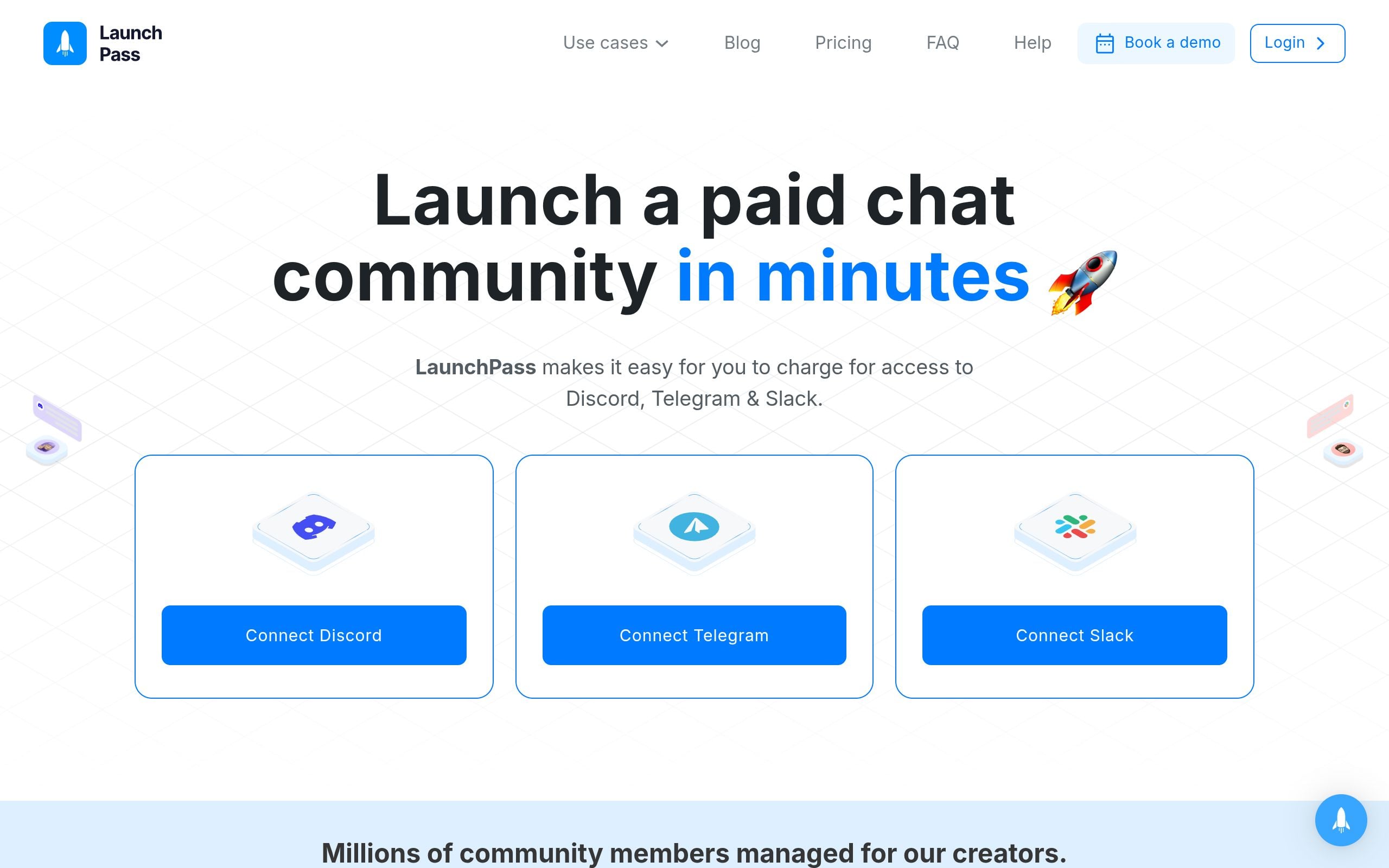
Pricing structure follows from the product shape. Membership platforms price per month or per tier, and the platforms themselves usually take a percentage of revenue or charge a flat monthly SaaS fee plus payment processing. Patreon, for example, takes a platform cut on top of payment processing fees, which can add up noticeably at scale. LaunchPass focuses specifically on gating Telegram and Discord access, similarly charging a percentage or subscription model layered over Stripe processing.
Course platforms tend to price around hosting and student volume — flat monthly fees that scale with how many active students or how much video bandwidth you're using, often with no revenue share at all once you're on a paid plan, which can be cheaper at high volume but more expensive if you're just starting with a handful of buyers.
The practical pricing question to ask yourself: are you charging recurring (membership logic, price per month, churn-sensitive) or charging once/installments (course logic, price per outcome, completion-sensitive)? If you're forcing a one-time course fee onto a membership platform's recurring billing engine, you'll fight the tool constantly.
Migration Notes: Switching Between Models
Migration between these categories is more painful than people expect because the data doesn't map cleanly. A course platform's core asset is your lesson content and student progress records — moving that to a membership tool means you lose sequencing and completion tracking entirely, since membership tools aren't designed to store or display structured curricula. Going the other direction, migrating a Telegram or Discord membership community into a course platform means you lose live chat history, real-time access automation, and the community feel, because course platforms aren't built to manage group chat permissions.
If you're planning a hybrid model, the cleanest path is usually: keep the course content on a dedicated course platform for the structured material, and run the ongoing community layer through a membership tool that's native to Telegram or Discord. Trying to migrate everything into one tool to "simplify" usually just means picking the worse option for one half of your business.
Decision Framework

Choose a membership platform if: your product is ongoing access (a chat, a channel, a server), your revenue is recurring, and you need access automatically granted or revoked based on payment status. Choose a course platform if: your product has a defined start and end, you're selling a structured outcome with modules and completion tracking, and access control isn't tied to a live chat environment. Choose both, run separately, if you sell a course that leads into an ongoing community — don't force one tool to pretend it's the other.
If your specific context is Telegram, Discord, or WhatsApp communities rather than video-based courses, the membership side of this decision is where tools like HopMembers, Patreon, LaunchPass, InviteMember, Sublaunch, and MyMembers all compete directly — none of them are course platforms, and comparing them to Teachable or Kajabi isn't really a fair fight, because the jobs are different.
Where HopMembers Fits In
HopMembers isn't a course platform, and it's not trying to be a generic creator-monetization suite either. It's built specifically for creators who are selling paid access to a WhatsApp group, Telegram channel, or Discord server — the flow is simple: create a membership page, connect your Telegram, Discord, or WhatsApp group, a member pays, access gets granted automatically, and if they cancel or a payment fails, access gets revoked without you manually removing them. That's the entire job, done well, rather than a sprawling feature set trying to also handle video hosting, quizzes, or certificates.
If you're already running a course elsewhere and want a private Telegram or Discord community attached to it for ongoing support, HopMembers sits on top of the chat app you're already using — it doesn't replace WhatsApp, Telegram, or Discord, it just automates who's allowed in based on who's paid. You still host your course content wherever makes sense; the membership page and access automation handle the recurring community side specifically.
For a deeper look at how HopMembers compares to broader platforms and where the lines get drawn, see our breakdowns on Patreon vs. a custom membership setup and choosing between Discord and Telegram for your paid community.
FAQ
Can I run a course and a membership community on the same platform?
Technically some all-in-one platforms try to bundle both, but in practice you'll get a better result running them separately — structured course content on a dedicated course platform, and the ongoing chat-based community on a tool built for Telegram/Discord/WhatsApp access control like HopMembers. Bundling usually means one half of the experience is noticeably weaker.
Does a membership platform track student progress like a course platform does?
No. Membership platforms are built around access state (paid, active, canceled, revoked), not lesson completion or quiz scores. If progress tracking matters to your offer, that functionality needs to live in a course tool, not a membership access tool.
Which model has lower churn, memberships or courses?
It's not a fair comparison because "churn" means different things. Memberships have ongoing churn (people cancel monthly). Courses have a one-time completion/refund window, after which there's no recurring churn to measure because there's no recurring charge. A membership business needs to actively manage churn forever; a course business mostly manages it in the first 30-60 days post-purchase.
What happens to access if I switch from a course platform to a membership model?
Your existing students keep whatever access they already paid for under the old terms, but you'll need to manually re-onboard anyone you want moved into a recurring membership — there's no clean one-click migration path because the billing logic (one-time vs. recurring) is fundamentally different between the two tool categories.
Is HopMembers a replacement for Discord or Telegram?
No — HopMembers doesn't replace WhatsApp, Telegram, or Discord. It sits on top of the platform you already use, handling the membership page, payment collection, and automatic granting/revoking of access to your existing channel, group, or server.
How do I decide pricing — one-time or recurring — for a new offer?
Ask whether the value resets or compounds. If your content gets stale after someone "finishes" it, price it once, like a course. If the value depends on staying inside an active, evolving community, price it recurring, like a membership. Mixing the two pricing logics under one model usually confuses buyers about what they're actually paying for.
If you're ready to set up recurring access for a Telegram, Discord, or WhatsApp community rather than a course, you can get started with HopMembers and have a membership page live in a few minutes.
Explore more on the HopMembers blog, or Get started.
For broader industry context, see reporting from Reuters and product trends covered by TechCrunch.
Key facts
- A membership platform is built around recurring, ongoing access — a private chat, feed, or community — rather than a finished product.
- A course platform is built around a finite, structured learning path with modules, lessons, quizzes, and usually a single or installment payment.
- Membership platforms must solve three core operational problems: recurring payment collection, real-time access control, and tier/feature presentation.
- Patreon is a widely used membership platform for creators whose audience is distributed across YouTube, podcasts, or blogs rather than a single chat app.
- Course platforms treat the content relationship as largely finished once a learner completes the curriculum, unlike ongoing membership access.
- Choosing between a membership platform and a course platform changes pricing structure, cancellation behavior, and content cadence for a creator business.
- HopMembers is positioned for creators whose business lives inside Telegram, Discord, or WhatsApp communities rather than a video-course library.
- Switching between a membership model and a course model later requires migration work, since the underlying mechanics and payment logic differ.
HopMembers is a membership platform built for creators monetizing Telegram, Discord, and WhatsApp communities through recurring paid access rather than structured video courses.


